
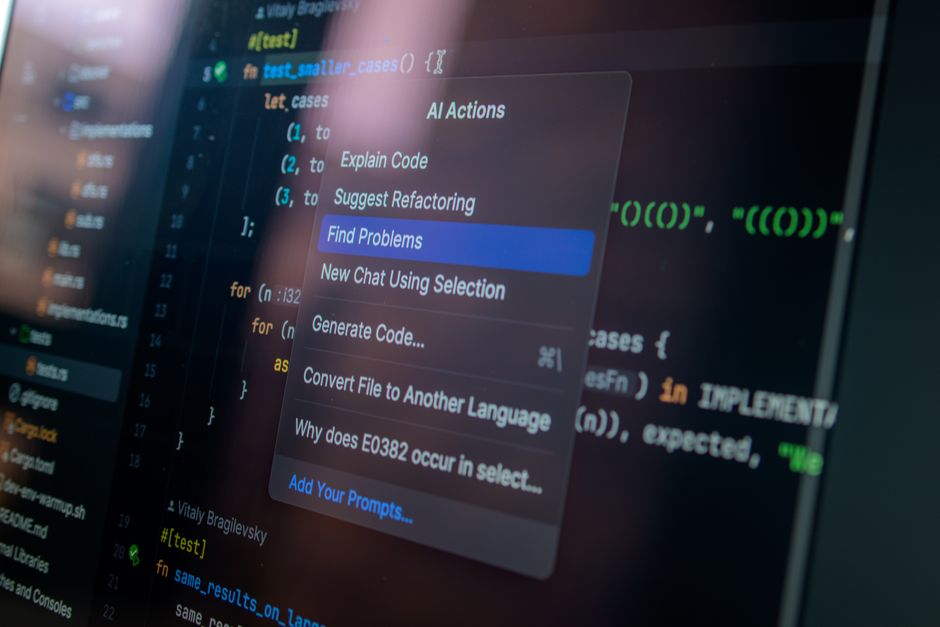
The digital world never stands still. What worked for your website last year might just be gathering dust today. With Google’s algorithms constantly evolving – influenced significantly by advanced AI models like Gemini – and user expectations for instant, relevant information hitting new highs, simply having a website isn’t enough. You need a living, breathing digital presence that’s woven into the very fabric of how people discover information: through search, news, and even targeted advertising.
This isn’t about chasing every new trend; it’s about strategically leveraging powerful AI tools like ChatGPT and Gemini to build, optimize, and promote a website that truly connects. Forget the old ways of siloed website development, SEO, and marketing. We’re entering an era where AI acts as the ultimate integrator, helping your site not just exist, but thrive in Google’s real-time ecosystem, from the initial lines of code to making headlines in Google News and driving conversions through Pay Per Click (PPC).
Harnessing AI for Smarter Website Development & Design
Before your website even goes live, AI can transform your development and design process. It’s not about replacing human creativity, but augmenting it, making the foundational steps smarter and more efficient.
AI-Powered UI/UX Brainstorming and Prototyping
-
Accelerated Ideation: Use ChatGPT or Gemini to brainstorm design concepts, user flows, and content structures tailored to specific user intents. Describe your target audience and website goals, and these AI tools can generate diverse ideas for layouts, navigation, and interactive elements. This can help you explore many options quickly, avoiding creative blocks.
-
Code Snippets and Frameworks: AI can assist developers by generating boilerplate code, suggesting responsive design CSS, or even drafting basic JavaScript functionalities. While it won’t write an entire complex application, it can significantly speed up the initial coding phase and help ensure best practices for accessibility and performance are considered from the outset.
-
Accessibility Checks: Feed your design concepts or even early HTML/CSS into an AI to get suggestions on improving accessibility for users with disabilities. This proactive approach ensures your website is inclusive from day one, rather than an afterthought.
AI for Dynamic Content Strategy & Optimization
Content is king, but relevant, timely content is emperor. AI helps you move beyond static blog posts to a dynamic content strategy that resonates with current search trends and user needs.
-
Topic Clustering and Gap Analysis: AI tools can analyze vast amounts of search data to identify interconnected topics and content gaps within your niche. Instead of just writing random articles, you can build comprehensive content clusters that establish your authority on a subject, signaling to Google that you’re a go-to resource.
-
E-E-A-T Enhancement: Google’s emphasis on Experience, Expertise, Authoritativeness, and Trustworthiness (E-E-A-T) is paramount. AI can help you research credible sources, summarize expert opinions, and even suggest ways to integrate author bios and citations that bolster your site’s E-E-A-T signals. Remember, AI helps research and structure, but human expertise and original insights are still critical for true E-E-A-T.
-
Optimizing for Voice Search and Featured Snippets: AI can analyze common questions and conversational queries related to your topics, helping you structure content that directly answers these questions concisely. This increases your chances of appearing in voice search results and securing valuable Google Featured Snippets.
Weaving Your Site into Google’s Real-Time Fabric
Once your foundation is solid, AI becomes your navigator, helping your website stay visible and relevant amidst the constant flux of Google Search and the rapid pace of news.
SEO with an AI Edge: Beyond Keywords
Modern SEO isn’t just about keywords; it’s about understanding user intent and delivering the most relevant, helpful experience. AI dramatically enhances this process.
-
Intelligent Keyword Research & Intent Mapping: AI goes beyond simple keyword volume. It helps you understand the *intent* behind search queries – are users looking to learn, compare, or buy? This allows you to create content that perfectly matches user expectations, leading to higher engagement and better rankings.
-
Technical SEO Audits and Suggestions: AI-powered tools can quickly scan your website for technical issues like broken links, slow loading times, crawl errors, and missing schema markup. They can then offer actionable suggestions for improvement, ensuring your site is easily discoverable and crawlable by Google’s bots.
-
Dynamic Internal Linking Strategies: AI can analyze your content and suggest intelligent internal linking opportunities, helping distribute “link juice” across your site, improve user navigation, and signal to Google the hierarchy and relationships between your pages.
Cracking the Google News Code with AI
Getting your content into Google News can provide an incredible surge of traffic and establish your brand as an authoritative source. AI can be a powerful ally in this often-challenging endeavor.
-
Real-Time Trend Monitoring: AI tools can continuously monitor social media, news outlets, and search trends to identify emerging topics and breaking stories relevant to your niche. This allows you to create timely, newsworthy content that has a higher chance of being picked up by Google News.
-
News-Specific Content Structuring: Google News favors certain content formats: clear headlines, concise summaries, and well-structured articles. AI can help you draft news-style headlines, generate succinct intro paragraphs, and ensure your articles follow a format conducive to news aggregation, while maintaining journalistic integrity.
-
Summarization and Repurposing: For complex topics, AI can help summarize key points quickly, making it easier for editors to review and for readers to grasp the essence. It can also help repurpose existing evergreen content with a fresh, news-relevant angle.
-
Crucial Reminder: While AI helps with speed and structure, the core of Google News eligibility remains original reporting, journalistic standards, clear authorship, and editorial oversight. AI assists, it doesn’t replace the need for human integrity and expertise.
Supercharging Your Visibility with AI-Driven PPC
Pay Per Click (PPC) campaigns, especially on Google Ads, are becoming increasingly sophisticated, leaning heavily on AI for optimization. Leveraging this can give your website an immediate visibility boost.
AI for Ad Copy & Landing Page Optimization
-
Hyper-Personalized Ad Copy: AI can generate multiple ad copy variations, testing different headlines, descriptions, and calls-to-action (CTAs) in real-time. It learns which combinations resonate best with specific audience segments, leading to higher click-through rates (CTR) and better quality scores.
-
Dynamic Landing Page Content: Beyond just optimizing the ad, AI can help you dynamically adjust content on your landing pages based on the user’s search query, location, or other demographic data. This ensures a seamless, highly relevant experience from ad click to conversion.
-
A/B Testing on Steroids: AI automates and scales A/B testing beyond human capabilities, constantly iterating and refining elements like button colors, headline phrasing, and image choices on your landing pages to maximize conversion rates.
Predictive Analytics & Bid Strategy
-
Smart Bidding: Google’s own AI-driven Smart Bidding strategies are incredibly powerful. They use machine learning to optimize bids in real-time for conversions or conversion value, taking into account a vast array of signals far beyond what a human can process.
-
Audience Segmentation & Forecasting: AI can identify subtle patterns in user behavior to uncover new, high-value audience segments you might have missed. It can also help forecast campaign performance, allowing you to allocate budget more effectively and anticipate trends.
The Human-AI Synergy: Why Your Expertise Still Reigns
It’s crucial to remember that AI, whether Gemini or ChatGPT, is a tool – an incredibly powerful one, but a tool nonetheless. It performs best when guided by human strategy, ethics, and creativity. Your unique brand voice, your deep understanding of your audience, your ethical considerations, and your ultimate decision-making power are irreplaceable. AI enhances your capabilities; it doesn’t diminish the need for your expertise. The future of website development, SEO, and digital marketing is a collaborative dance between human ingenuity and artificial intelligence.
FAQ: AI and Your Website’s Future
Q: Can AI build my entire website from scratch without human input?
A: While AI can generate code snippets, design ideas, and content, it cannot (yet) build a complex, fully functional, and truly unique website from scratch without significant human oversight and direction. Human developers and designers are essential for strategic planning, custom features, nuanced aesthetics, and ensuring the site perfectly aligns with brand goals.
Q: How do I ensure my AI-generated content ranks well and doesn’t get flagged by Google?
A: The key is to use AI as an assistant, not a replacement. Always fact-check, refine, and add your unique human insights and expertise to AI-generated content. Ensure it meets Google’s E-E-A-T guidelines by providing original value, clear authorship, and supporting evidence. Google penalizes low-quality, spammy content, not content that used AI as a tool for creation, as long as it’s helpful and high-quality for users.
Q: Is it ethical to use AI for Google News content?
A: Yes, if used responsibly and ethically. AI can assist with research, summarization, and structuring news content. However, the core journalistic principles of accuracy, originality, and attribution must be upheld by human editors. Content submitted to Google News should always reflect human editorial oversight and verification, with AI acting as a support tool, not the sole author.
Q: Will AI replace web developers, SEO specialists, or PPC managers?
A: Not entirely. AI will undoubtedly change these roles, shifting the focus from repetitive tasks to higher-level strategy, critical thinking, and creative problem-solving. Professionals who learn to effectively leverage AI tools will be the ones who thrive, enhancing their productivity and strategic impact rather than being replaced.
Q: What’s the first step to integrating AI into my website strategy?
A: Start small! Identify a specific pain point or a repetitive task where AI could offer immediate value. This could be brainstorming blog topics, generating meta descriptions, or suggesting ad copy variations. Experiment with tools like ChatGPT or Gemini, understand their capabilities, and gradually integrate them into your workflow. Education and experimentation are key.
Conclusion
<