
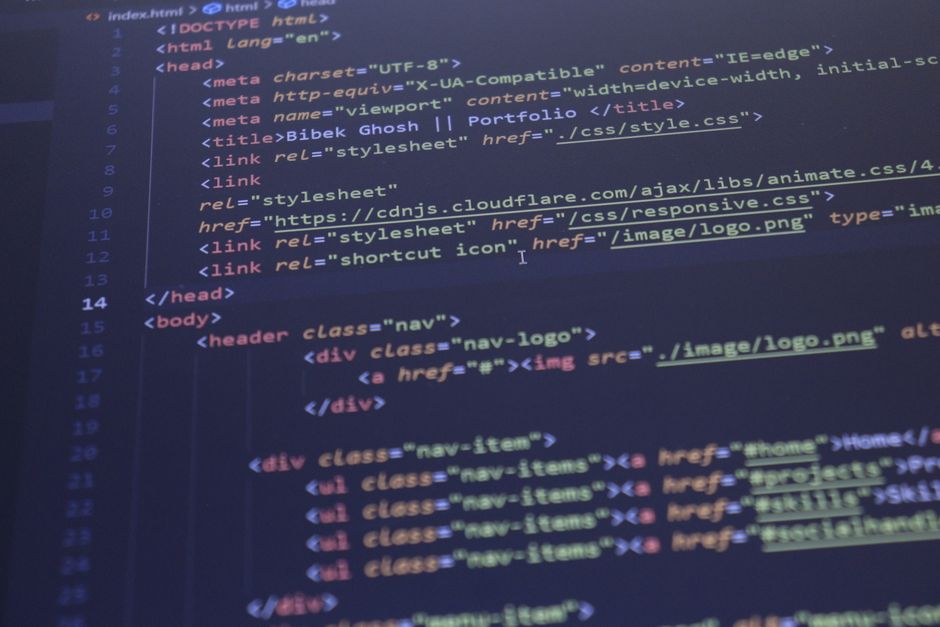
Remember the days when building a website felt like a marathon? Hours spent on wireframes, countless revisions on design elements, and the constant worry about SEO. While those fundamentals haven’t disappeared, a powerful new ally has emerged: Artificial Intelligence. Forget the sci-fi fantasies; AI is here, and it’s quietly revolutionizing how we approach website development, design, and even how we get found online.
This isn’t about replacing human creativity or expertise. Instead, it’s about augmenting it. Think of AI as your super-powered assistant, capable of handling repetitive tasks, uncovering hidden insights, and accelerating processes that once took days. Whether you’re a seasoned developer, a small business owner looking to build your first online presence, or a marketer trying to optimize your campaigns, understanding how AI can integrate into your website development workflow is no longer a luxury – it’s a necessity.
The AI Wave: From Design to Development Tools
The impact of AI is felt across the entire website development lifecycle. We’re seeing a significant shift in how we approach everything from initial concept to ongoing optimization. Let’s break down some key areas:
AI-Powered Design Assistants: Faster, Smarter Visuals
Gone are the days of staring at a blank canvas for hours. AI-powered design tools are emerging that can:
- Generate design concepts: Based on your input (brand colors, target audience, desired style), AI can propose multiple design layouts and aesthetic directions, significantly speeding up the ideation phase.
- Automate repetitive design tasks: Think resizing images, creating consistent spacing, or even generating variations of UI elements. AI can handle these tedious jobs, freeing up designers to focus on higher-level creative work.
- Predict user experience (UX) issues: Some AI tools can analyze your design and flag potential usability problems before they even make it to development, saving you costly rework.
- Personalize user interfaces: Imagine a website that subtly adapts its layout or content based on individual user behavior. AI is making this level of personalization increasingly achievable.
Tools like Midjourney and DALL-E are already demonstrating the power of AI in generating unique visual assets, and we’re seeing dedicated platforms for website design that integrate these capabilities. While they won’t replace the strategic thinking of a human designer, they can be incredible accelerators.
Intelligent Development: Streamlining the Code
For developers, AI is becoming an indispensable partner. Platforms like GitHub Copilot, powered by large language models similar to ChatGPT and Google’s Gemini, are changing the coding landscape:
- Code generation and completion: AI can suggest code snippets, complete lines of code, and even generate entire functions based on natural language descriptions. This dramatically reduces typing and the chance of syntax errors.
- Bug detection and debugging: AI can analyze your code to identify potential bugs and suggest fixes, streamlining the debugging process.
- Code refactoring and optimization: AI can help identify areas in your code that can be made more efficient or readable, leading to better performance.
- Automated testing: AI can assist in generating test cases and even running tests, ensuring the stability and reliability of your website.
The integration of AI into development environments means faster development cycles, fewer errors, and ultimately, a more robust final product.
SEO and AI: A Symbiotic Relationship
The impact of AI on Search Engine Optimization (SEO) is profound and multifaceted. Search engines themselves are increasingly leveraging AI to understand content and user intent, and marketers are using AI to refine their strategies.
Google’s AI Evolution and Your Content Strategy
Google’s algorithms, particularly those that power Search Generative Experience (SGE) and are informed by models like Gemini, are becoming incredibly sophisticated at understanding context, nuance, and user intent. This means:
- Focus on true user intent: AI is better at understanding *why* someone is searching, not just *what* they are searching for. Your content needs to directly address these underlying needs and questions.
- Conversational search: As people become more comfortable asking questions in natural language (like they would to ChatGPT or Gemini), your website content should mirror this. Long-tail keywords and comprehensive answers become even more crucial.
- Topical authority is paramount: AI can identify authoritative sources. Instead of just targeting isolated keywords, build comprehensive content clusters around related topics to establish your website as a go-to resource.
- Quality over keyword stuffing: AI can easily detect unnatural keyword usage. Focus on creating genuinely valuable, informative, and engaging content that naturally incorporates relevant terms.
AI-Powered SEO Tools: Unlocking Deeper Insights
Beyond search engine algorithms, AI is empowering SEO professionals with advanced tools:
- Content gap analysis: AI can identify topics your competitors are covering that you are not, helping you find new content opportunities.
- Predictive keyword research: AI can analyze trends and suggest keywords that are likely to gain traction in the future.
- Automated content optimization: Tools can analyze your existing content and suggest improvements for SEO, readability, and engagement.
- Personalized link-building strategies: AI can help identify the most relevant and authoritative websites for outreach.
Pay-Per-Click (PPC) Advertising in the Age of AI
Pay-per-click advertising, once a heavily manual process, is also being transformed by AI. Platforms like Google Ads are integrating AI to improve campaign performance:
- Automated bidding strategies: AI can analyze vast amounts of data to adjust bids in real-time, optimizing for conversions, clicks, or other goals.
- Smart targeting: AI can identify audience segments that are most likely to convert, improving ad spend efficiency.
- Ad creative optimization: AI can test different ad copy and visuals to determine what resonates best with your target audience.
- Performance forecasting: AI can help predict campaign performance, allowing for better budget allocation and strategy adjustments.
While human oversight is still crucial for setting campaign goals and understanding the overall strategy, AI is handling much of the granular optimization, leading to more effective and cost-efficient PPC campaigns.
Google News and AI: Staying Ahead of the Curve
For businesses that rely on timely information or news dissemination, understanding how Google News uses AI is vital. Google News employs AI to:
- Personalize news feeds: AI analyzes user interests and browsing history to curate a personalized news experience.
- Identify breaking news: AI can quickly detect emerging stories and prioritize them in search results.
- Assess credibility and authority: While still a developing area, AI is being used to help identify reliable sources and flag misinformation.
- Categorize and organize content: AI helps to group related articles and provide context for readers.
For website owners aiming to be featured or ranked well in Google News, this means creating timely, accurate, and well-sourced content that clearly addresses current events. Building topical authority and ensuring your content is easily discoverable by AI crawlers is key.
Practical Tips for Integrating AI into Your Workflow
Feeling overwhelmed? Don’t be. Here’s how you can start leveraging AI today:
1. Start with Specific Pain Points
Don’t try to implement AI everywhere at once. Identify a specific task or challenge in your current workflow that AI could potentially solve. Is it repetitive coding? Time-consuming design iterations? Difficulty in identifying SEO opportunities?
2. Experiment with AI-Powered Tools
Many AI tools offer free trials or freemium versions. Explore platforms like GitHub Copilot for coding, Canva’s AI features for design, or AI-powered SEO audit tools. See which ones fit your needs and budget.
3. Focus on Augmentation, Not Replacement
Remember, AI is a tool to enhance your skills, not replace them. Use AI to handle the mundane, freeing you up for strategic thinking, creative problem-solving, and building genuine human connections with your audience.
4. Prioritize High-Quality Data
AI models are only as good as the data they are trained on. For SEO and content, this means focusing on creating accurate, original, and valuable content that answers user queries effectively. For PPC, it means providing clear conversion goals.
5. Stay Informed and Adapt
The AI landscape is evolving at breakneck speed. Make it a habit to read industry news, experiment with new tools, and be willing to adapt your strategies as AI capabilities grow.
Frequently Asked Questions (FAQ)
Q1: Will AI replace website developers and designers?
It’s highly unlikely. AI will automate many tasks, but human creativity, strategic thinking, understanding of user psychology, and complex problem-solving will remain essential. AI will likely become a powerful co-pilot for these professionals.
Q2: How can small businesses use AI for their website without a big budget?
Many AI tools offer free tiers or affordable subscription plans. Start by using AI for tasks like generating content ideas, optimizing social media posts, or leveraging AI-powered website builders that offer intelligent design suggestions.
Q3: Is it ethical to use AI-generated content for SEO?
Google’s guidelines state that AI-generated content is acceptable as long as it is high-quality, original, and helpful to users. The key is to use AI as a tool to enhance your own writing and ensure the final output is valuable and unique, not just a rehash of existing information.
Q4: How does AI affect the accuracy of information on websites?
AI can generate information quickly, but it’s crucial to fact-check and verify any AI-generated content. AI models can sometimes hallucinate or present outdated information. Human oversight is paramount for ensuring accuracy and credibility.
Q5: What’s the difference between ChatGPT and Gemini for website development?
Both ChatGPT (from OpenAI) and Gemini (from Google) are powerful large language models capable of assisting with coding, content generation, and ideation. Gemini has the advantage of being developed by Google, potentially offering deeper integration with Google’s ecosystem and a nuanced understanding of Google’s search algorithms. The best choice often depends on the specific task and your existing toolset.
Conclusion: Embrace the AI Revolution
The integration of AI into website development, design, SEO, and PPC is not a distant future; it’s happening now. By understanding these advancements and actively exploring how AI can enhance your workflow, you can build more effective, efficient, and user-centric websites. This is an exciting time to be in the digital space, and embracing AI is your key to staying competitive and unlocking new levels of success.
