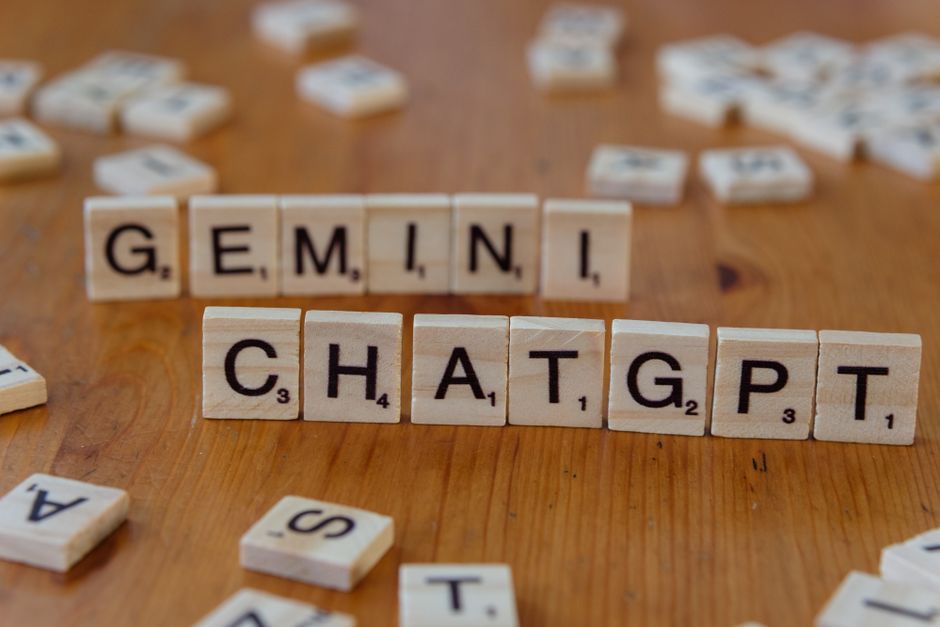
The world of website development and design is constantly evolving, and lately, the buzz around Artificial Intelligence (AI) has been deafening. Tools like Google’s Gemini and OpenAI’s ChatGPT are everywhere, promising to revolutionize how we build and market our online presence. But beyond the hype, what does this *really* mean for your next website project? Are these AI models the magic bullet for instant SEO success and perfectly crafted landing pages, or are they just fancy chatbots you can’t rely on for critical business decisions?
As someone navigating the digital landscape, you’re likely bombarded with information. You want to understand how to leverage these powerful tools to create websites that not only look great but also perform exceptionally well in search engines and drive genuine customer engagement. This article cuts through the noise to offer practical, actionable insights into how AI can genuinely augment your website development and design process, focusing on current user intent and real-world applications.
AI as Your Digital Co-Pilot: Not a Replacement Pilot
The most crucial understanding when approaching AI for website projects is this: AI is a powerful co-pilot, not a replacement pilot. It excels at accelerating tasks, generating ideas, and providing data-driven insights. However, human oversight, strategic thinking, and ethical considerations remain paramount. Think of Gemini and ChatGPT as incredibly knowledgeable assistants who can handle a significant portion of the heavy lifting, freeing you up to focus on the strategic, creative, and business-critical aspects of your website.
Accelerating Content Creation and Optimization
One of the most immediate and impactful applications of AI is in content creation. For SEO, high-quality, relevant content is king. Both Gemini and ChatGPT can:
- Brainstorm Blog Post Ideas: Stuck for inspiration? Feed your niche and target audience into the AI and ask for a list of blog post topics. You can even ask it to tailor these ideas to specific keywords you’re targeting.
- Draft Initial Content: Need a first draft of a product description, an “About Us” page, or even a blog post? AI can generate human-like text that you can then refine, edit, and inject with your brand’s unique voice.
- Keyword Research Assistance: While dedicated SEO tools are essential, AI can help identify related keywords, long-tail variations, and even suggest question-based queries your audience might be searching for.
- Content Rephrasing and Summarization: Need to repurpose existing content for different platforms or simplify complex information? AI can do that efficiently.
- Meta Description and Title Tag Generation: Crafting compelling meta descriptions and title tags that entice clicks can be time-consuming. AI can provide multiple options based on your content and target keywords.
Enhancing Website Design and User Experience (UX)
While AI doesn’t (yet) design a full website from scratch with artistic flair, it can significantly aid the design process:
- Wireframing and Layout Suggestions: Describe the purpose of a page and your target audience, and AI can suggest logical layouts, user flow pathways, and even basic wireframe structures.
- Color Palette and Typography Ideas: Based on your brand identity or industry, AI can propose color schemes and font pairings that evoke the desired emotions and maintain readability.
- A/B Testing Hypothesis Generation: Want to improve conversion rates? AI can suggest hypotheses for A/B tests on headlines, calls-to-action, button colors, and more, based on best practices and common user behavior patterns.
- Accessibility Checks (Assisted): While not a substitute for rigorous accessibility testing, AI can help identify potential issues with color contrast or suggest alternative text for images.
- Personalization Strategies: For more advanced websites, AI can help conceptualize how to personalize content and user journeys based on user data and behavior.
Navigating the Pay-Per-Click (PPC) Landscape with AI
For businesses employing Pay-Per-Click advertising, AI offers powerful ways to optimize campaigns and maximize ROI:
- Ad Copy Generation: Create multiple variations of ad headlines and descriptions tailored to specific keywords and target audiences. AI can help you test different angles and tones.
- Keyword Expansion and Negative Keyword Identification: AI can analyze your search queries and suggest new, relevant keywords to target, as well as identify irrelevant terms that are draining your budget (negative keywords).
- Audience Segmentation Ideas: Based on campaign performance data, AI can suggest ways to segment your audience for more targeted ad delivery.
- Landing Page Optimization Suggestions: AI can analyze your landing page content and suggest improvements to align it better with your ad copy and improve conversion rates.
The Google News Connection: Fresh Content and Authority
For many businesses, appearing in Google News can be a significant traffic driver and credibility booster. While AI can’t guarantee you’ll be featured, it can help you create content that is more likely to be picked up:
- Identifying Trending Topics: By monitoring news feeds and social media trends within your industry, AI can help you identify timely topics to cover.
- Fact-Checking Assistance: Ensuring the accuracy of your content is crucial for news publications. AI can assist in quickly verifying facts from multiple sources.
- Crafting Newsworthy Angles: AI can help you frame your company’s announcements, research, or expert opinions in a way that is more appealing to news editors and readers.
- Summarizing Complex Reports: If your business is releasing a detailed report or study, AI can help create concise summaries that are more digestible for news outlets.
Practical Tips for Integrating AI into Your Workflow
Here’s how to start using AI effectively without getting overwhelmed:
Start Small and Experiment
Don’t try to overhaul your entire website development process overnight. Pick one area, like content ideation for your blog, and experiment with Gemini or ChatGPT. See what works for you.
Define Clear Prompts
The quality of AI output is directly related to the quality of your input. Be specific in your prompts. Instead of “write a blog post about SEO,” try “Write a 500-word blog post for small business owners explaining the benefits of local SEO, focusing on practical tips they can implement today. Include a call to action to download our free guide.”
Fact-Check and Edit Relentlessly
AI can sometimes generate incorrect information or present it in a biased way. Always fact-check any claims and thoroughly edit the output to ensure accuracy, clarity, and adherence to your brand voice. AI is a starting point, not an endpoint.
Focus on Augmentation, Not Automation
Use AI to enhance your skills and efficiency, not to replace critical thinking. Your expertise in your business, your audience, and your industry is irreplaceable.
Stay Updated on AI Developments
The AI landscape is moving at lightning speed. Keep an eye on new features and capabilities of tools like Gemini and ChatGPT, as well as emerging AI platforms.
Consider AI for Repetitive Tasks
Think about the tasks you do repeatedly that are time-consuming but don’t require deep strategic thought. These are prime candidates for AI assistance.
Frequently Asked Questions (FAQ)
Can AI write an entire website for me?
Not yet, and likely not in a way that would be truly unique, strategic, and brand-aligned. AI can generate code snippets, suggest layouts, and write content, but the overall architecture, user experience design, and strategic vision still require human expertise.
Is AI-generated content bad for SEO?
Not inherently. Google’s guidelines focus on helpful, reliable, people-first content. If you use AI to *assist* in creating high-quality, original, and valuable content that you then edit and enhance, it can be very beneficial for SEO. Purely unedited, generic AI content might struggle.
How do I ensure my AI-assisted content sounds human?
The key is thorough editing. Inject your brand’s personality, unique insights, and specific examples. Read it aloud to catch awkward phrasing. AI is a great first draft generator, but human refinement is essential.
Which AI tool is best for website development: Gemini or ChatGPT?
Both are powerful, but they have different strengths. Gemini, being a Google product, might have better integration with Google’s ecosystem (like Search and Ads). ChatGPT is known for its strong conversational abilities and creative text generation. Experiment with both to see which fits your workflow best. Often, using a combination can be most effective.
How can AI help me with my Pay-Per-Click campaigns if I’m on a tight budget?
AI can help you get more out of a smaller budget by optimizing your ad copy to improve click-through rates, identifying more efficient keywords, and suggesting ways to reduce wasted ad spend on irrelevant clicks. This can lead to better performance even with limited investment.
Conclusion: Embrace AI as a Catalyst for Innovation
The integration of AI tools like Gemini and ChatGPT into website development and design is not a trend to be feared, but an opportunity to be embraced. By understanding their strengths and limitations, and by adopting a practical, human-centric approach, you can leverage these technologies to accelerate your projects, enhance your content, optimize your marketing efforts, and ultimately, build more effective and successful websites. Think of AI as your intelligent assistant, empowering you to focus on what truly matters: creating value for your audience and achieving your business goals.