
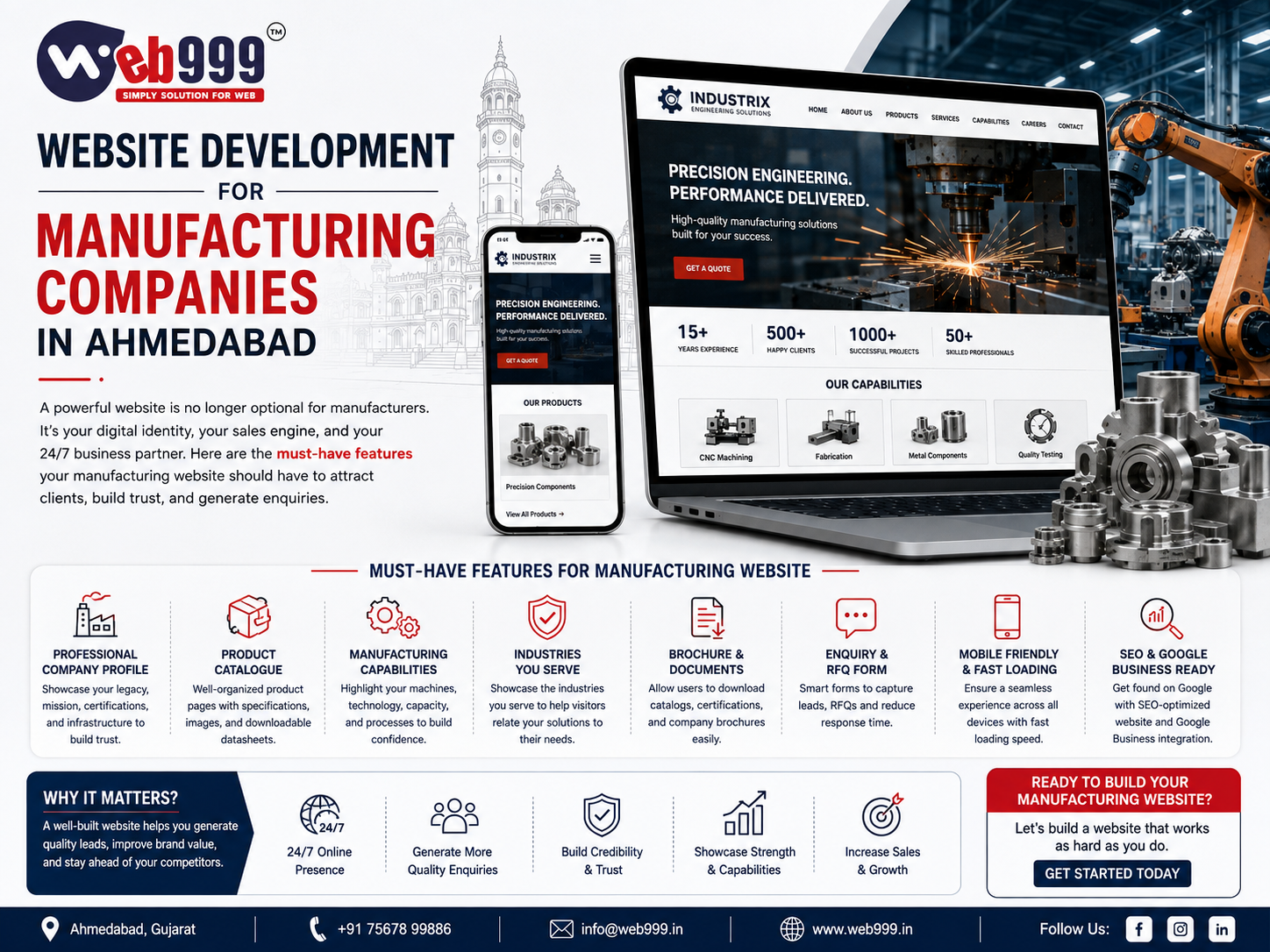
A manufacturing company website should do much more than display a company profile.
It should help potential buyers understand what you manufacture, compare your products, check technical details, build trust in your company and contact your sales team without unnecessary effort.
For manufacturers in Ahmedabad, this becomes even more important because competition is not limited to the local market. Many manufacturers sell across Gujarat, across India and even internationally.
A buyer searching for an industrial product may compare several suppliers before making an enquiry.
If your website looks outdated, loads slowly, hides important product information or makes it difficult to contact your company, you may lose that enquiry before your sales team even gets a chance to speak with the buyer.
That is why website development for manufacturing companies in Ahmedabad should focus on functionality, clarity and lead generation rather than unnecessary visual effects.
This guide explains the website features manufacturing businesses actually need.
Why Manufacturing Companies Need a Different Type of Website
A manufacturing website is different from a restaurant, fashion brand or local service website.
Your customers may be:
- Purchase managers
- Engineers
- Dealers
- Distributors
- Contractors
- Project consultants
- Procurement teams
- Importers
- Export buyers
- Other manufacturers
These visitors often need detailed information before contacting you.
They may want to know:
- What products do you manufacture?
- What are the technical specifications?
- Which industries do you serve?
- Can you customize the product?
- What materials are available?
- Do you export?
- What is your production capacity?
- Do you provide installation?
- Can they download your catalogue?
- How can they request a quotation?
A good manufacturing website should answer these questions clearly.
1. A Clear Homepage That Explains What You Manufacture
One of the most common problems with manufacturing websites is a vague homepage.
Many start with headings such as:
Welcome to ABC Industries
or
Quality Is Our Commitment
These statements are not wrong, but they do not immediately tell the visitor what the business actually does.
Your homepage should clearly explain your main products and market.
For example:
Industrial Pump Manufacturer in Ahmedabad, Gujarat
or:
Packaging Machinery Manufacturer & Exporter in Ahmedabad
A buyer should understand your business within a few seconds of opening your website.
Your homepage can highlight:
- Main product categories
- Industries served
- Manufacturing capabilities
- Years of experience
- Certifications
- Export markets
- Key company strengths
- Contact options
Keep the structure simple and easy to scan.
2. Separate Pages for Important Products
Manufacturing companies often make the mistake of displaying all products on one page.
For example:
Our Products
- Pump A
- Pump B
- Pump C
- Pump D
- Pump E
This may be enough for a brochure, but it is not ideal for a professional website or SEO.
Important products should have their own pages.
Suppose you manufacture industrial pumps.
Your website could include separate pages such as:
- yourwebsite.com/centrifugal-pump/
- yourwebsite.com/chemical-process-pump/
- yourwebsite.com/stainless-steel-pump/
- yourwebsite.com/high-pressure-pump/
Each page can then explain that product properly.
This makes the website more useful for buyers and also gives search engines a clearer understanding of your product range.
3. Detailed Product Specifications
B2B buyers usually need more information than a product name and one image.
Your product pages should contain useful technical details wherever relevant.
These may include:
- Model
- Capacity
- Size
- Material
- Dimensions
- Power
- Pressure
- Output
- Temperature range
- Operating conditions
- Technical standards
- Available variations
The exact specifications depend on your industry.
A packaging machine page will need different specifications from an industrial pump or chemical equipment page.
The point is simple:
Give buyers enough information to decide whether your product could match their requirement.
4. High-Quality Original Product Photos
Good visuals matter in B2B too.
Use real photographs of your:
- Products
- Machinery
- Factory
- Production line
- Quality-control process
- Packaging
- Team
- Finished installations
Avoid depending entirely on stock images.
A serious buyer wants to see the actual company they may be dealing with.
Original photographs also make your website more credible and distinctive.
Whenever possible, show products from multiple angles and include close-up images of important components.
5. Downloadable Product Catalogue
Manufacturing buyers often want to save or forward product information.
A downloadable PDF catalogue is therefore useful.
You may provide:
- Complete company catalogue
- Product-category brochure
- Individual technical datasheet
- Specification sheet
A buyer may download the catalogue and send it internally to a manager, engineer or purchase department.
However, do not place all important information only inside a PDF.
Your website pages should still contain useful product content because many visitors will not download the catalogue immediately.
6. Request a Quote Form
A manufacturing website should make it easy to request pricing.
Instead of using only a basic Contact Us form, consider a dedicated Request a Quote form.
Useful fields may include:
- Name
- Company name
- Phone number
- Product required
- Quantity
- Location
- Requirement details
- File upload
For technical products, file upload can be particularly useful.
A buyer may want to attach:
- Drawing
- Specification
- BOQ
- Reference image
- Requirement sheet
This can help your sales team understand the enquiry before contacting the buyer.
Keep the form useful but not unnecessarily long.
7. WhatsApp and Click-to-Call Options
Many buyers prefer quick communication.
Your website should make it easy to contact your company from mobile.
Useful options include:
- Call Now
- Request Quote
These CTAs should be visible on important pages.
For example, after a buyer reads a product specification, they should not have to search through the entire website to find your phone number.
At Web999, we generally recommend keeping important contact actions easy to access, particularly on mobile devices.
8. Industry-Specific Pages
If your products serve multiple industries, create useful pages around those industries.
For example, an equipment manufacturer may serve:
- Pharmaceutical
- Chemical
- Food processing
- Textile
- Packaging
- Automobile
- Construction
An industry page can explain:
- Typical applications
- Relevant products
- Industry-specific problems
- Recommended solutions
- Technical considerations
This helps buyers find information that directly relates to their business.
It can also support your SEO strategy.
9. About Us Page That Builds Real Trust
Manufacturing buyers usually want to know who they are dealing with.
Your About Us page should not contain only generic lines such as:
“We believe in customer satisfaction and quality products.”
Tell the buyer something meaningful.
You can include:
- Company history
- Year established
- Manufacturing experience
- Factory location
- Production facilities
- Number of employees
- Leadership
- Markets served
- Export experience
- Quality philosophy
- Major milestones
Use real information.
The objective is to help the buyer understand that there is a genuine, established business behind the website.
10. Factory & Infrastructure Section
For a manufacturer, your infrastructure can be a major selling point.
A dedicated infrastructure page can show:
- Factory building
- Production units
- Machines
- Assembly area
- Testing facilities
- Warehouse
- Packaging area
- Quality-control department
If possible, mention relevant capabilities.
For example:
- Production capacity
- Machinery used
- Testing process
- Facility size
Do not publish confidential operational information, but give buyers enough information to understand your capabilities.
11. Certifications and Quality Standards
Certifications can build confidence, especially for industrial and export buyers.
Depending on your business, you may display:
- ISO certifications
- Industry certifications
- Quality certificates
- Test certificates
- Compliance documents
- Memberships
Make sure all claims are genuine and current.
If the certificate is important for customers, you may also provide a clear image or downloadable copy.
12. Industries Served
Create a dedicated section showing where your products are used.
This can help potential customers immediately understand whether your company serves their sector.
For example:
Industries We Serve
- Chemical
- Pharmaceutical
- Food Processing
- Textile
- Engineering
- Packaging
- Water Treatment
- Automobile
Each industry can link to a dedicated page where enough relevant content exists.
13. Applications Section
Sometimes a buyer may not know your exact product name.
They may know only the application they need.
For example:
Instead of searching for a specific pump model, they may search:
pump for chemical transfer
or:
pump for high-temperature liquid
Application-based pages can help address this type of demand.
You can explain:
- The application
- Typical problem
- Suitable product
- Technical considerations
- Recommended configuration
This is useful both for visitors and SEO.
14. SEO-Friendly Website Structure
A manufacturing website should be built with SEO in mind from the beginning.
That does not mean adding the same keyword everywhere.
A good SEO-friendly structure includes:
- Clean URLs
- Proper page titles
- Logical headings
- Product-specific pages
- Internal linking
- Image alt text
- XML sitemap
- Fast loading
- Mobile responsiveness
- Search-engine-friendly navigation
For example:
A URL like:
yourwebsite.com/product.php?id=123
does not communicate much.
A cleaner structure could be:
yourwebsite.com/industrial-pumps/centrifugal-pump/
This is clearer for both users and search engines.
15. Mobile-Friendly Design
Manufacturing buyers also use smartphones.
A purchase manager may discover your website while travelling.
A contractor may open your product link directly from WhatsApp.
A distributor may check your catalogue on a mobile phone.
Your website should therefore work properly on:
- Smartphones
- Tablets
- Laptops
- Desktop computers
Text should be readable.
Buttons should be easy to click.
Tables should not break the layout.
Enquiry forms should be easy to complete.
Mobile-friendly development is no longer an optional extra.
16. Fast Website Loading
Manufacturing websites often become slow because they contain:
- Large product images
- PDF catalogues
- Factory videos
- Heavy sliders
- Unoptimized plugins
A slow website creates a poor first impression.
Speed optimization may include:
- Image compression
- WebP images
- Caching
- Better hosting
- Optimized scripts
- Database optimization
- Reduced unnecessary plugins
Do not sacrifice useful information for speed, but make sure that information is delivered efficiently.
17. Product Search and Filters
If you manufacture a large number of products, navigation becomes important.
A visitor should not have to manually open dozens of pages to find the right product.
Depending on your catalogue, useful filters may include:
- Product category
- Capacity
- Size
- Material
- Application
- Industry
- Model
Advanced filtering is not necessary for every manufacturer.
It becomes useful when you have a large and complex product range.
18. Case Studies and Projects
Case studies are powerful for manufacturing companies because they demonstrate actual experience.
For example:
Customer Requirement
A chemical manufacturer needed equipment suitable for a corrosive application.
Challenge
The operating environment required a specific material and performance range.
Solution
Your team recommended and supplied an appropriate configuration.
Result
The solution met the customer’s operational requirements.
A genuine case study can demonstrate your technical expertise better than a generic statement such as:
“We provide the best solutions.”
Always obtain permission before publishing confidential customer information.
19. Client and Testimonial Section
If permitted, showcasing companies or sectors you have worked with can build credibility.
You may display:
- Client testimonials
- Customer industries
- Project photographs
- Client logos with permission
For export-focused businesses, you can also mention countries served.
Avoid publishing client logos without permission simply to make the website look impressive.
Trust works best when it is genuine.
20. Export Information
Ahmedabad has many export-oriented manufacturing companies.
If exports are an important part of your business, include a dedicated export section.
It may contain:
- Export markets
- Countries served
- Packaging capability
- Documentation
- International standards
- Shipping experience
- Ports used where relevant
- Export enquiry option
An overseas buyer should be able to quickly understand whether your company can handle international orders.
21. Multilingual Website if Required
English is often enough for B2B manufacturing websites, particularly where you sell nationally or internationally.
However, some businesses may benefit from additional languages.
For example:
- Gujarati
- Hindi
- Arabic
- French
- Spanish
Do not create multilingual functionality simply because it sounds impressive.
Add languages when they genuinely support your target market.
Professional translation is also important.
Poor machine-translated technical content can reduce trust.
22. Blog or Knowledge Centre
A manufacturing blog should not contain random company updates.
It should answer genuine buyer questions.
For example, an industrial valve manufacturer could publish:
- How to Select an Industrial Valve
- Ball Valve vs Butterfly Valve
- Valve Materials Explained
- Industrial Valve Maintenance Guide
- How to Choose a Valve for Chemical Applications
This type of content can support SEO and also demonstrate technical expertise.
You do not need to publish every day.
Quality and relevance matter more than quantity.
23. FAQ Section
Your sales team probably answers many questions repeatedly.
Turn these into useful FAQs.
For example:
- Do you manufacture customized products?
- What is your minimum order quantity?
- Do you export internationally?
- Can you provide technical drawings?
- What is your normal delivery time?
- Do you provide installation?
- Can I request a sample?
- Do you provide after-sales support?
Answering common questions can save time for both buyers and your sales team.
24. Easy-to-Manage Admin Panel
Your website should not become dependent on a developer for every small change.
A suitable CMS such as WordPress can allow your team to manage:
- Product information
- Images
- Blogs
- Pages
- Contact information
- Catalogue files
- News
- Basic content updates
The exact system should depend on your requirements.
A manufacturer with hundreds of complex products may require more customized management features.
25. CRM or ERP Integration When Needed
Not every manufacturing company needs CRM or ERP integration.
But larger businesses may benefit from connecting website enquiries with internal systems.
Examples include:
- Automatically sending website enquiries to CRM
- Connecting product inventory
- Dealer enquiry management
- Lead assignment
- Sales pipeline tracking
- Quotation automation
These features require additional development and should be implemented only when they solve a real operational problem.
26. Dealer or Distributor Portal
Manufacturers working through dealers may eventually need a private dealer section.
A dealer portal could provide:
- Dealer login
- Product prices
- Catalogue downloads
- Stock information
- Order placement
- Documents
- Dealer offers
- Support requests
This is an advanced feature and is not required for every business.
Start with the core website first.
Add dealer functionality when there is a clear business need.
27. Live Chat Is Not Always Necessary
Many manufacturing businesses add live-chat systems simply because other websites have them.
But if nobody in your company is available to respond, it can create a poor experience.
For many B2B manufacturing websites, WhatsApp, phone, email and enquiry forms may be enough.
Use a feature because it improves communication, not because it looks modern.
28. Social Media Links Without Distraction
If your company actively uses LinkedIn, YouTube, Instagram or Facebook, you can include those links.
For manufacturing businesses, LinkedIn and YouTube can be especially useful.
YouTube can be used for:
- Machine demonstrations
- Factory tours
- Installation videos
- Product testing
- Maintenance guides
But your social media links should not distract visitors from the main purpose of the website: understanding your products and sending an enquiry.
29. Google Analytics and Search Tracking
A professional website should allow you to measure performance.
Useful tracking can include:
- Website visitors
- Traffic sources
- Most visited products
- Organic search traffic
- Enquiry form submissions
- Phone clicks
- WhatsApp clicks
- Catalogue downloads
This helps you understand what is actually generating interest.
You can then improve the website based on real data rather than assumptions.
30. Strong Calls to Action
A visitor should always know what to do next.
Useful calls to action for manufacturing websites include:
- Request a Quote
- Send Your Requirement
- Download Catalogue
- Talk to Our Sales Team
- WhatsApp Us
- Call Now
- Ask for Technical Details
You do not need aggressive pop-ups everywhere.
Simple, clearly placed CTAs are usually more effective.
Features You Probably Don’t Need on Day One
Manufacturing businesses sometimes spend money on features that look impressive but provide little value.
Examples may include:
- Complicated animations
- Auto-playing background videos everywhere
- Unnecessary chatbots
- Large sliders containing six banners
- Complex user accounts
- Mobile app
- Advanced dashboards
- Dealer portals
- Multilingual functionality
- Custom calculators
These features can be useful in some situations.
But they should be added because your business genuinely needs them.
A clean, fast website with strong product information and clear enquiry options is usually more valuable than an overloaded website with dozens of unnecessary features.
Example Website Structure for a Manufacturing Company
A practical manufacturing website could follow a structure like this:
Home
Quick overview of company, products and strengths.
About Us
Company history, experience and manufacturing capabilities.
Products
Main product categories.
Individual Product Pages
Detailed specifications, applications and enquiry options.
Industries We Serve
Industry-specific information.
Infrastructure
Factory, machinery and quality process.
Quality & Certifications
Relevant standards and certificates.
Applications
Product-use cases.
Catalogue
Downloadable brochures and technical documents.
Blog
Helpful product and industry guides.
Contact Us
Address, phone, email, map and enquiry form.
Request a Quote
Dedicated B2B enquiry form.
This structure can be expanded depending on your business.
What Should a Manufacturing Website Cost in Ahmedabad?
The final cost depends on your requirements.
A small manufacturer with 10 products and basic enquiry functionality will require a smaller budget than an industrial company with:
- 200 products
- Advanced filtering
- Technical documents
- Multiple industries
- Export pages
- CRM integration
- Custom quotation system
Factors affecting development cost include:
- Number of pages
- Number of products
- Custom design
- Product data entry
- Content writing
- Photography
- Catalogue creation
- SEO
- Forms
- Integrations
- Custom functionality
The best approach is to define the project scope before comparing quotations.
Do not compare two website prices unless both quotations include the same work.
Website Development and SEO Should Work Together
A manufacturer may spend money on SEO but still struggle to generate enquiries because the website is weak.
The opposite can also happen.
A company may have a beautiful website that receives almost no visitors.
This is why website development and SEO should support each other.
Website development builds the platform.
SEO helps relevant potential customers discover it.
Your website then needs to convert those visitors into enquiries.
For manufacturers, this usually means combining:
Professional website + Product SEO + Technical SEO + Useful content + Clear enquiry system
Common Manufacturing Website Mistakes
Hiding Products Inside a PDF
Your catalogue is useful, but buyers and search engines should also be able to access important product information directly on the website.
Too Much Company Talk
Customers care about your company, but they also want to understand how your product solves their requirement.
No Technical Information
Avoid product pages containing only marketing statements.
Poor Mobile Experience
Buyers often visit from smartphones.
Slow Website
Large images and heavy animations can create unnecessary delays.
Outdated Contact Information
Make sure phone numbers, emails and addresses are current.
No Enquiry CTA
Do not make visitors search for a way to contact you.
Duplicate Product Content
Every product should have useful, specific information.
No SEO Planning
Do not build a website first and think about search visibility years later.
Why Choose Web999 for Manufacturing Website Development in Ahmedabad?
At Web999, we develop websites with a focus on business usability, mobile responsiveness, speed, SEO-friendly structure and easy customer communication.
For manufacturing businesses, website development can include:
- Professional responsive design
- Product categories
- Individual product pages
- Technical specification sections
- Request-a-quote forms
- WhatsApp CTA
- Click-to-call functionality
- Product catalogue download
- Industry pages
- Infrastructure pages
- SEO-ready structure
- Blog section
- Contact forms
- Google Maps integration
- Mobile optimization
- Speed-focused development
The objective is not to make your website complicated.
The objective is to help potential buyers quickly understand your manufacturing capabilities and contact your sales team.
Frequently Asked Questions
What Type of Website Is Best for a Manufacturing Company?
Most manufacturing companies need a professional business website with product pages, technical information, enquiry forms, catalogue downloads and an SEO-friendly structure.
How Many Product Pages Should a Manufacturer Create?
Important products and major product categories should usually have separate pages.
The exact number depends on your range and how customers search for those products.
Should a Manufacturing Website Have Pricing?
It depends on your business.
Businesses selling standardized products may display prices.
Companies providing customized industrial products may prefer a Request a Quote system.
Is WordPress Suitable for Manufacturing Websites?
Yes, WordPress can work well for many small and medium manufacturing companies, particularly when products are informational rather than sold directly online.
Does a Manufacturing Company Need an E-Commerce Website?
Not necessarily.
If orders require quotations, technical discussion or customized specifications, a B2B enquiry-based website may be more appropriate than a traditional online store.
Should Manufacturers Invest in SEO?
If potential buyers search Google for your products, SEO can help your company improve visibility for those searches and potentially generate relevant B2B enquiries.
Can Buyers Upload Drawings or Requirement Files?
Yes.
A custom enquiry form can allow buyers to upload drawings, PDFs, specifications or other documents.
Can an Old Manufacturing Website Be Redesigned?
Yes.
Existing websites can be reviewed and redesigned to improve appearance, mobile usability, product presentation, SEO structure, speed and lead generation.
Build a Manufacturing Website That Supports Sales
Your manufacturing website does not need hundreds of fancy features.
It needs the right ones.
A potential buyer should be able to:
- Find your company
- Understand what you manufacture
- Check product details
- Evaluate your capabilities
- Trust your business
- Send an enquiry
If your website makes those six things easy, it is already doing valuable work for your sales team.
For manufacturers in Ahmedabad, a professionally developed website can help support local, national and international business development.
If you’re planning a new manufacturing website or want to improve an existing one, Web999 can help you build a fast, mobile-friendly and SEO-ready website around your actual business requirements.
Need a Website for Your Manufacturing Company in Ahmedabad?
Contact Web999 and share your product range, target market and required features to get a suitable website development plan.