
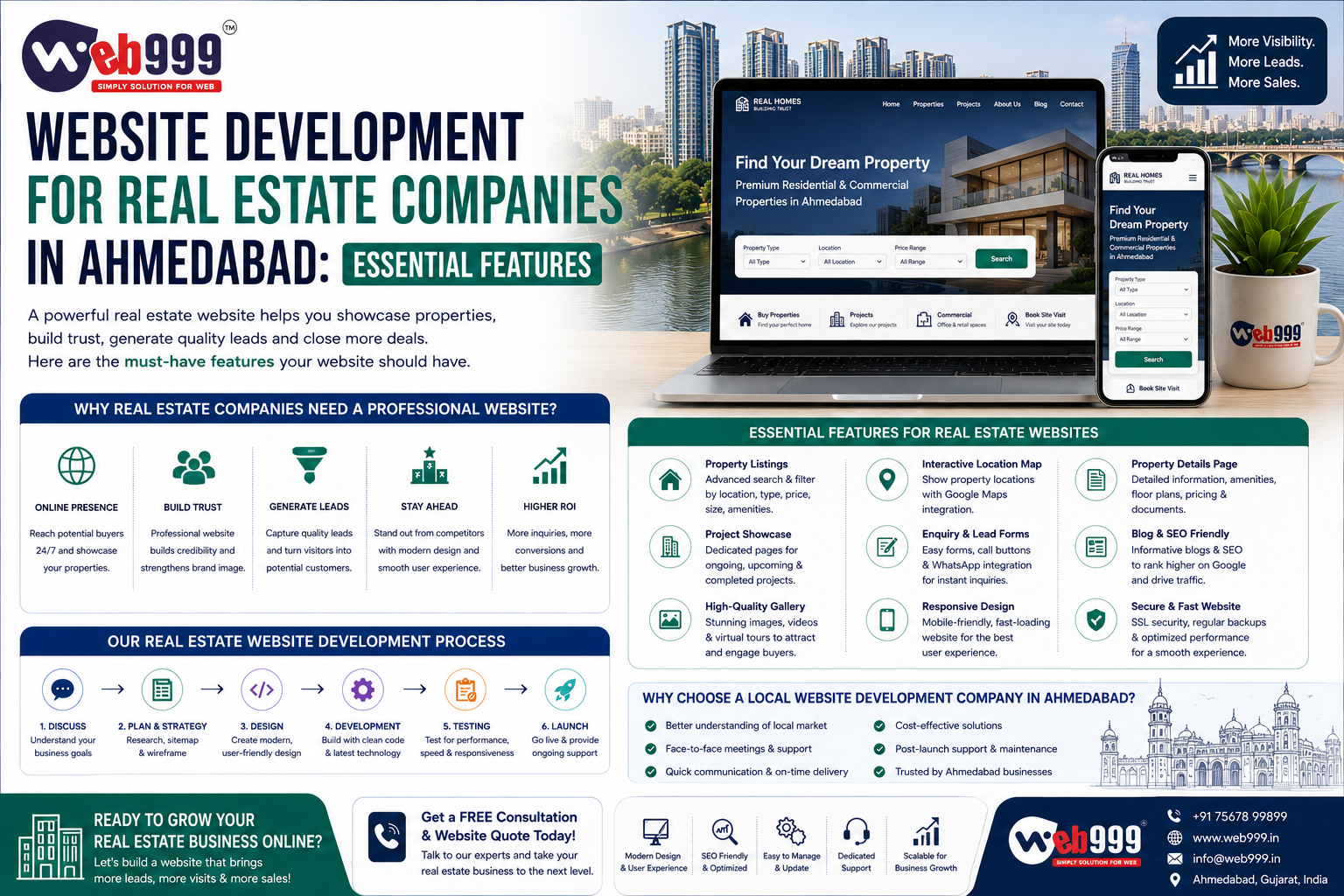
The real estate market is highly competitive, and buyers usually research online before they call a broker, visit a project or schedule a site visit.
A person looking for property in Ahmedabad may search:
- “2 BHK flats in Ahmedabad”
- “new residential projects in Bopal”
- “commercial property in SG Highway”
- “real estate developer in Ahmedabad”
- “property consultant near me”
If your real estate company has a weak, outdated or difficult-to-use website, potential buyers may leave before contacting you.
That is why website development for real estate companies in Ahmedabad should focus on more than attractive images.
A good real estate website should help visitors:
- Discover properties easily
- Filter listings
- Understand project details
- View photos and floor plans
- Check location
- Request a callback
- Schedule a site visit
- Contact your sales team quickly
This guide explains the essential features a real estate website should include and what Ahmedabad property businesses should consider before development.
Why Does a Real Estate Company Need a Professional Website?
Many real estate businesses depend heavily on:
- Property portals
- Social media
- Google Ads
- Brokers
- Offline marketing
- Referrals
These channels can generate leads.
But your own website gives you a digital platform that you control.
You can use it to showcase:
- Residential projects
- Commercial properties
- Ready-to-move properties
- Upcoming projects
- Luxury properties
- Plotting projects
- Rental properties
- Investment opportunities
Instead of sending every potential customer to a third-party portal, your website gives them a direct way to explore your inventory and contact your team.
1. Start With a Strong Homepage
Your homepage should immediately explain what kind of real estate business you are.
For example:
Residential & Commercial Property Consultants in Ahmedabad
or:
Explore New Residential Projects in Ahmedabad
Avoid generic headings such as:
Welcome to ABC Realty
The first screen should ideally include:
- Clear headline
- Location
- Property search
- Featured projects
- Main CTA
- Contact options
A visitor should understand your offer within a few seconds.
2. Add Property Search Functionality
Property search is one of the most useful features for real estate websites.
Visitors should be able to search based on criteria such as:
- Property type
- Location
- Budget
- Bedrooms
- Project status
- Buy or rent
For example:
Location: Bopal
Property Type: Apartment
Bedrooms: 3 BHK
Budget: ₹75 lakh – ₹1 crore
A good search system makes it easier for visitors to find relevant properties instead of browsing dozens of unrelated listings.
3. Use Advanced Property Filters
If you have a large inventory, basic search may not be enough.
Useful filters can include:
- 1 BHK
- 2 BHK
- 3 BHK
- 4 BHK
- Villa
- Apartment
- Plot
- Office
- Shop
- Warehouse
- Budget
- Carpet area
- Location
- Possession status
- Furnished status
Do not add filters just because they look advanced.
Use filters that actually help your buyers.
4. Create Dedicated Property Detail Pages
Every important property or project should have its own page.
A good property detail page may include:
- Property name
- Location
- Price range
- Property type
- Configuration
- Carpet area
- Possession status
- Project overview
- Amenities
- Images
- Floor plans
- Location map
- Nearby landmarks
- Brochure
- Enquiry form
- Site visit CTA
Do not put every project on one long page.
Separate pages are easier for buyers to explore and can also support SEO.
5. Use High-Quality Property Images
Real estate is highly visual.
Poor images can reduce interest immediately.
Use:
- Exterior photos
- Interior photos
- Sample flat photos
- Amenities
- Clubhouse
- Garden
- Parking
- Entrance
- Views
- Site progress
Where possible, use original images rather than generic stock visuals.
If a project is under construction, clearly identify renders and actual site photographs.
6. Add Image Galleries
Do not show only one image per property.
Create organized galleries for:
- Exterior
- Interior
- Bedrooms
- Kitchen
- Amenities
- Floor plans
- Location
- Site progress
Make galleries mobile friendly.
Users should be able to swipe through images easily.
7. Add Project Videos and Virtual Tours
Video can make a property website much more engaging.
You may include:
- Project walkthrough
- Sample flat tour
- Drone video
- Location tour
- Construction update
- Amenities walkthrough
For premium projects, virtual tours can help buyers explore the property remotely.
Do not auto-play large videos everywhere because that can slow down the website.
8. Add Floor Plans
Floor plans are important for serious property buyers.
Provide clear plans for different configurations.
For example:
- 2 BHK
- 3 BHK
- 4 BHK
Show relevant details such as:
- Carpet area
- Room dimensions
- Balcony
- Kitchen
- Bathrooms
If possible, allow visitors to enlarge or download the floor plan.
9. Add Brochure Download
Many buyers want a project brochure they can save or share.
A downloadable brochure can include:
- Project overview
- Floor plans
- Amenities
- Location
- Specifications
- Developer details
You can offer:
Download Brochure
You may also ask for basic contact details before providing the brochure if lead generation is part of your strategy.
Keep the form short.
10. Add a Schedule Site Visit Feature
This is one of the most valuable conversion features for real estate websites.
A site visit form can include:
- Name
- Phone number
- Preferred date
- Preferred time
- Property
- Message
A clear CTA such as:
Schedule a Site Visit
can be more effective than a generic Contact Us button.
11. Add Request a Callback
Not every buyer wants to complete a long enquiry form.
A simple callback form can ask for:
- Name
- Phone Number
- Preferred Time
This can improve lead generation, especially on mobile.
12. Add WhatsApp Integration
WhatsApp is extremely useful for real estate businesses.
Visitors may want to quickly ask:
- Price?
- Is this available?
- Can I visit today?
- Send brochure
A WhatsApp CTA can reduce friction.
For example:
WhatsApp Property Advisor
You can also configure the message to mention the property name.
13. Add Click-to-Call Buttons
Mobile visitors should be able to call your sales team easily.
Use a visible:
Call Now
button.
Do not hide the phone number only in the footer.
For high-intent real estate leads, easy communication matters.
14. Add Google Maps
Every project page should clearly show the location.
Use Google Maps where appropriate.
Also mention nearby landmarks such as:
- Schools
- Hospitals
- Metro stations
- Business hubs
- Shopping areas
- Airport
- Major roads
Location is one of the biggest decision factors in real estate.
Make it easy to understand.
15. Create Location-Specific Pages
Real estate searches are often highly location specific.
Ahmedabad buyers may search for properties in:
- Bopal
- South Bopal
- Shela
- Satellite
- Vastrapur
- Prahladnagar
- Thaltej
- SG Highway
- Gota
- Chandkheda
- Science City
- Shilaj
- Vaishnodevi Circle
- Nikol
- Naroda
If you actively deal in specific areas, useful location pages can help.
For example:
- Flats for Sale in Bopal
- Commercial Property on SG Highway
- Residential Projects in Shela
Each page should contain genuine information about that location and available properties.
Avoid creating dozens of identical pages where only the area name changes.
16. Create Buy, Sell and Rent Sections
If your company handles multiple types of transactions, make them easy to navigate.
Buy Property
For buyers looking to purchase.
Sell Property
For property owners wanting to list or sell.
Rent Property
For tenants and landlords.
This helps different visitors reach the right section quickly.
17. Add Property Submission Form
If property owners can list through your company, create a:
List Your Property
form.
You may collect:
- Owner name
- Phone
- Property type
- Location
- Expected price
- Property size
- Property photos
- Description
This can help generate seller leads as well as buyer leads.
18. Add Developer Profiles
If you promote projects from multiple developers, create useful developer pages.
A developer profile may contain:
- Developer name
- Company overview
- Projects
- Locations
- Completed developments
- Current projects
This helps buyers explore properties by builder.
19. Create Project Status Categories
Visitors often search by project stage.
Useful categories can include:
- Upcoming
- New Launch
- Under Construction
- Ready to Move
- Completed
This makes filtering easier.
20. Add Price Information Carefully
Real estate pricing changes frequently.
You can show:
Starting from ₹75 lakh
or:
Price on Request
depending on the project.
If prices change regularly, your website admin panel should make updating them easy.
Avoid displaying old pricing for months.
This can create poor-quality leads and customer frustration.
21. Mention RERA Details Where Applicable
Project pages should display relevant regulatory information where required.
This may include:
- RERA number
- Project registration details
- Developer information
Accuracy is important.
Do not copy regulatory details from unofficial sources without verification.
22. Create an Admin Panel
Real estate websites change frequently.
You may need to:
- Add new properties
- Remove sold properties
- Update prices
- Change project status
- Add photos
- Upload brochures
- Edit descriptions
A CMS or admin panel can make these updates much easier.
You should not have to call a developer every time a price changes.
23. Add Property Management Features
Your admin panel can allow your team to manage:
- Property title
- Location
- Price
- BHK
- Area
- Property type
- Status
- Images
- Floor plans
- Brochure
- Description
- Contact form
For larger real estate companies, custom property management functionality may be useful.
24. Connect Leads to CRM
A growing real estate team may benefit from CRM integration.
When someone submits an enquiry, the lead can be sent automatically to your CRM.
This can help with:
- Lead assignment
- Follow-up
- Sales status
- Source tracking
- Site visit management
CRM integration is not necessary for every small broker.
But it becomes valuable when the business receives a large number of leads.
25. Track Lead Sources
You should know where your property enquiries come from.
Potential sources include:
- Google organic search
- Google Ads
- Facebook Ads
- Property portals
- Direct visitors
- Referral campaigns
Tracking helps you understand which marketing channels generate serious buyers.
26. Create Landing Pages for Google Ads
Do not always send paid traffic to your homepage.
If you are advertising one specific project, create a dedicated landing page.
For example:
Luxury 3 BHK Apartments in Shela
The landing page can focus on:
- Project highlights
- Price
- Floor plan
- Location
- Amenities
- Gallery
- Enquiry
- Site visit
This gives visitors a more focused experience.
27. Optimize for Mobile Users
Real estate websites receive a lot of mobile traffic.
A mobile visitor should be able to:
- Search properties
- Filter listings
- View images
- Check price
- Open map
- Call
- Book site visit
without struggling with the layout.
Make sure forms are easy to fill out on smaller screens.
28. Improve Website Speed
Property websites can become slow because of:
- Large photographs
- Too many sliders
- Videos
- Multiple plugins
- Heavy maps
Optimize your images and website structure.
A website containing hundreds of property photos requires especially careful performance management.
29. Avoid Too Many Pop-Ups
Real estate websites sometimes use aggressive pop-ups everywhere:
- Enter Phone Number
- Download Brochure
- Book Visit
- Get Price
If a visitor closes one and another appears immediately, the website becomes frustrating.
Use lead forms strategically.
Let people explore the property first.
30. Add SEO-Friendly Property Pages
Property pages should have clear titles, headings and URLs.
Avoid URLs such as:
website.com/property?id=2389
A cleaner structure may look like:
website.com/projects/3-bhk-flats-bopal/
Your page title might be:
3 BHK Flats in Bopal, Ahmedabad | Project Name
Use keywords naturally.
Do not stuff every Ahmedabad area into the same title.
31. Create SEO Content Around Buyer Questions
A real estate company can use blogs to reach potential buyers during research.
Useful topics could include:
- Best Areas to Buy a Home in Ahmedabad
- 2 BHK vs 3 BHK: Which Is Better for Your Family?
- Property Buying Checklist for Ahmedabad
- How to Check RERA Registration Before Buying Property
- Ready-to-Move vs Under-Construction Property
- Home Buying Costs Beyond Property Price
These topics can bring buyers to your website before they have selected a specific property.
32. Use Internal Linking
Connect related content.
For example:
A blog titled:
Best Areas to Buy a Home in Ahmedabad
can link to:
- Properties in Bopal
- Properties in Shela
- Properties in Gota
Project pages can link to:
- Nearby projects
- Same-budget properties
- Similar configurations
- Location pages
This helps visitors explore more properties.
33. Add Similar Properties
When someone views one property, show related listings.
For example:
- Similar Properties
- Other 3 BHK Projects in Bopal
- Properties Under ₹1 Crore
This can keep visitors on your website longer and help them discover other options.
34. Add Recently Viewed Properties
For websites with many listings, recently viewed functionality can improve usability.
Visitors may compare several projects before making a decision.
Giving them an easy way to return to previously viewed properties can help.
35. Add Favorites or Shortlist
For larger property portals, allow users to shortlist properties.
They can save:
- Preferred projects
- Apartments
- Villas
- Commercial spaces
This is useful when buyers are comparing multiple options.
However, a small real estate company may not need this feature initially.
36. Add Mortgage or EMI Calculator
An EMI calculator can be helpful for residential buyers.
Visitors can enter:
- Loan amount
- Interest rate
- Tenure
and get an estimated monthly EMI.
Make it clear that the result is indicative.
Final loan eligibility and rates depend on the lender.
37. Add Property Comparison
For a larger real estate website, a comparison feature can help buyers compare:
- Price
- Location
- Area
- Configuration
- Amenities
- Possession
This can make the website more useful.
Again, it is not necessary for every project.
38. Showcase Testimonials Carefully
Real client testimonials can help build trust.
You may include testimonials from:
- Buyers
- Sellers
- Investors
- Property owners
Use genuine feedback.
Do not create fake reviews simply to make the website look popular.
39. Add an About Company Page
Real estate is a trust-driven business.
Your About page can explain:
- Years in business
- Areas served
- Type of properties handled
- Team
- Experience
- Services
- Office location
Avoid generic lines such as:
“We are the best real estate company providing world-class services.”
Use actual facts.
40. Show Your Real Estate Team
For brokerage and consulting businesses, show the people behind the company.
You may include:
- Founder
- Property consultants
- Sales team
- Relationship managers
This can make the business feel more approachable.
41. Add Clear Contact Information
Your Contact page should include:
- Office address
- Phone
- Google Map
- Working hours
- Enquiry form
If you have multiple offices, list each location clearly.
42. Use SSL and Website Security
Your website should use HTTPS.
This is especially important when you collect:
- Contact details
- Property enquiries
- Seller information
- Login information
Keep the website software and plugins updated.
Use proper backups and security practices.
43. Add Privacy Policy
If you collect names, phone numbers and email addresses, explain how the information is handled.
Your website should have an appropriate Privacy Policy.
If you run advertising and tracking tools, consider the relevant privacy requirements for your business and users.
44. Integrate Social Media
Real estate businesses often use:
- YouTube
You can link these platforms to your website.
For example, YouTube can host:
- Property tours
- Project walkthroughs
- Location videos
- Construction updates
Your website should remain the central place where users can view complete information and enquire.
45. What Website Structure Is Best for a Real Estate Company?
A practical structure might be:
Home
Main projects, property search and lead generation.
Properties
All property listings.
Residential
Apartments, villas and plots.
Commercial
Offices, shops and industrial property.
Locations
Ahmedabad area-specific property pages.
Developers
Builder profiles.
About Us
Company information.
Blog
Buyer guides and market content.
List Your Property
Seller lead form.
Contact
Office and enquiry information.
The structure can be simplified or expanded according to your business.
Website for Real Estate Developer vs Property Broker
The website structure should depend on your business model.
Real Estate Developer
Usually needs:
- Company profile
- Current projects
- Completed projects
- Upcoming projects
- Project detail pages
- Construction updates
- Investor information
- Enquiry forms
Property Broker or Consultant
May need:
- Property listings
- Advanced search
- Buyer enquiries
- Seller submissions
- Location pages
- Property filters
Real Estate Portal
May require:
- User accounts
- Property submissions
- Agent profiles
- Filters
- Shortlists
- Payments
- Subscription systems
The cost and complexity can vary significantly.
How Much Does a Real Estate Website Cost in Ahmedabad?
There is no single fixed price.
The cost depends on features.
A basic real estate company website with company information, projects and enquiry forms can be developed at a lower budget.
A property portal with:
- Hundreds of listings
- Advanced search
- User accounts
- Agent dashboards
- CRM integration
- Property comparison
- Shortlists
will require substantially more development work.
Important Pricing Factors
- Number of pages
- Number of properties
- Custom design
- Property management
- Search filters
- Maps
- Forms
- CRM
- SEO
- Content
- Admin functionality
Always define the scope before comparing quotations.
Common Real Estate Website Mistakes
Avoid these common problems:
- Outdated property prices
- Sold properties still marked available
- Poor mobile design
- Slow image galleries
- No property filters
- No location information
- Missing floor plans
- Hidden phone number
- Too many pop-ups
- No site visit CTA
- Generic project descriptions
- Poor SEO structure
- No lead tracking
- No admin panel
A real estate website should make property discovery easier, not more complicated.
Why Choose Web999 for Real Estate Website Development in Ahmedabad?
At Web999, real estate websites can be developed around the actual requirements of developers, brokers, consultants and property businesses.
Depending on your project, website features can include:
- Responsive website design
- Property listings
- Property detail pages
- Search and filters
- Project galleries
- Floor plans
- Google Maps
- Brochure downloads
- WhatsApp integration
- Click-to-call
- Site visit forms
- Request callback
- Admin panel
- SEO-friendly structure
- Blog management
- Landing pages
- CRM integrations
The objective should be to create a website that supports both marketing and sales.
A visitor should be able to find a relevant property, understand the project and contact your team quickly.
Frequently Asked Questions
Why Does a Real Estate Company Need a Website?
A website allows you to showcase properties, projects, locations, floor plans and other information while generating direct buyer and seller enquiries.
What Features Should a Real Estate Website Have?
Important features may include property listings, filters, project pages, image galleries, maps, floor plans, brochures, WhatsApp, call buttons and enquiry forms.
Do I Need Property Search Functionality?
If you have many listings, yes.
Search and filters can help visitors find relevant properties faster.
Should Every Property Have a Separate Page?
Yes.
Important properties and projects generally benefit from their own detailed pages.
Can I Update Property Prices Myself?
With a properly configured CMS or admin panel, your team can update prices, images, availability and other property details.
Can I Add a Site Visit Booking Form?
Yes.
Visitors can request a site visit by selecting the property, date and preferred time.
Is SEO Useful for Real Estate Companies?
Yes.
SEO can help your website appear for relevant property, location and informational searches when the website has useful content and a strong technical foundation.
Is WordPress Suitable for a Real Estate Website?
WordPress can be suitable for many real estate businesses, especially when property management and content requirements are moderate.
More advanced portals may require custom development.
Can a Real Estate Website Integrate With CRM?
Yes.
Enquiry forms can be connected with compatible CRM systems depending on the technical requirements.
Can an Old Real Estate Website Be Redesigned?
Yes.
Existing websites can be redesigned to improve property presentation, mobile usability, SEO structure, speed and lead generation.
Final Thoughts
A successful real estate website is not simply an online catalogue of properties.
It should help potential buyers move from:
Search → Property Discovery → Project Research → Enquiry → Site Visit
Focus on features that genuinely help buyers:
- Property search
- Useful filters
- Dedicated project pages
- Real photos
- Floor plans
- Maps
- Brochure downloads
- Call buttons
- Site visit forms
- Mobile-friendly design
- SEO-friendly structure
The best real estate website is not the one with the most features.
It is the one that makes it easy for serious buyers to find the right property and contact your team.
If you are planning a new real estate website or redesigning an existing one in Ahmedabad, Web999 can help build a solution around your properties, target locations and lead-generation requirements.
Need a Real Estate Website in Ahmedabad?
Contact Web999 with your number of properties, required filters, target locations and features to discuss a suitable website development plan.