
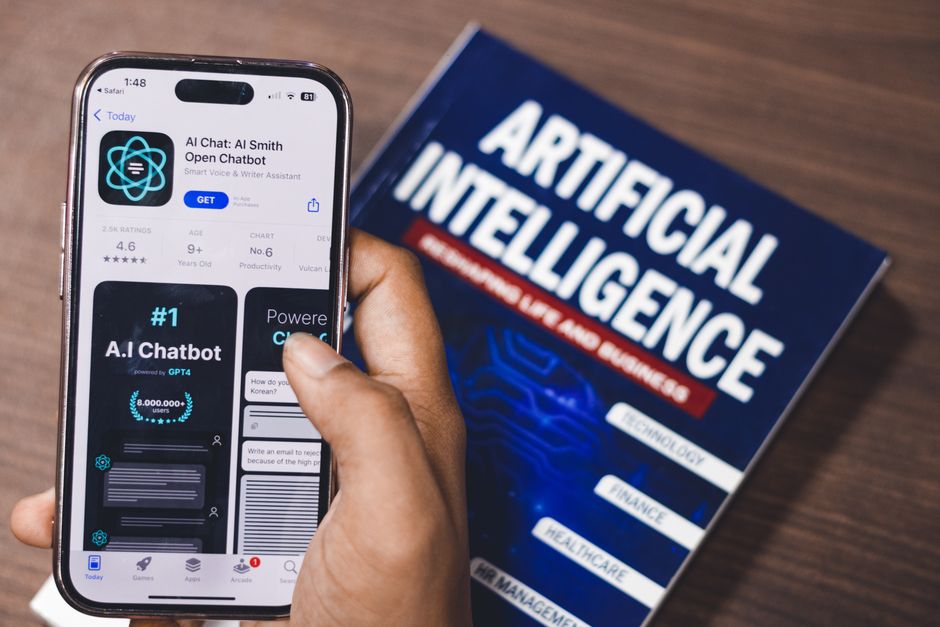
We’re all hearing a lot about AI lately, especially when it comes to things like ChatGPT and Google’s own Gemini. They’re everywhere, promising to revolutionize everything from writing to coding. But beyond the hype, what does this actually mean for your website? If you’re thinking about website development or website design, or even just trying to boost your SEO and get more out of your pay-per-click campaigns, you might be wondering how these powerful AI tools can genuinely help you, not just as a content creator, but as a website owner.
Forget the sci-fi scenarios. The real impact of AI on website development and design is happening now, in practical, everyday ways. It’s about making the process faster, smarter, and more effective. It’s about understanding your users better and delivering experiences that truly resonate. Let’s dive into how these AI advancements are quietly, yet powerfully, reshaping the landscape of your online presence.
AI as Your Design Co-Pilot: From Blank Canvas to Brilliant Layout
For years, website design has been a blend of artistry and technical skill. Designers would spend hours sketching wireframes, choosing color palettes, and agonizing over font pairings. Now, AI is stepping in as a powerful co-pilot, accelerating this process and offering new creative avenues.
Generative Design and Idea Sparking
Tools like Gemini and ChatGPT can now assist in generating initial design concepts. Instead of starting with a completely blank canvas, you can feed an AI a brief describing your business, target audience, and desired aesthetic. The AI can then generate multiple layout options, color schemes, and even suggest imagery. This isn’t about replacing the designer, but about providing a wealth of starting points, saving precious time and sparking creativity.
Practical Tip: Use AI prompts like “Generate three modern website layout ideas for a sustainable fashion brand targeting millennials, focusing on visual storytelling and easy navigation.” Review the suggestions, pick elements you like, and then hand them over to your human designer to refine and execute.
Content-Driven Design Elements
AI is excellent at analyzing text and understanding its sentiment and key themes. This can be leveraged in website design to automatically suggest or generate design elements that complement your content. For example, if your website copy is focused on innovation and technology, an AI could suggest sharp, modern typography and dynamic visual elements. If your content is more about community and warmth, it might suggest softer color palettes and more organic shapes.
Practical Tip: As you write your website content, consider using AI content analysis tools to identify keywords and core messages. Then, use these insights to inform your design prompts for AI-assisted layout generation.
Website Development Supercharged by AI
The technical side of website development is also seeing a significant boost from AI. From coding assistance to bug detection, AI is becoming an indispensable tool for developers.
AI-Powered Coding Assistants
Tools like GitHub Copilot (powered by OpenAI’s models, similar to ChatGPT) are already transforming how developers write code. These assistants can suggest lines of code, complete functions, and even generate entire code snippets based on natural language descriptions. This dramatically speeds up development time and reduces the likelihood of common coding errors.
Practical Tip: For developers, explore AI coding assistants. They can help you write boilerplate code faster, learn new programming languages more effectively, and even suggest more efficient ways to implement features. Think of it as having an incredibly knowledgeable pair programmer available 24/7.
Automated Testing and Debugging
AI can also be used to automate website testing and identify bugs with greater accuracy and speed than traditional methods. AI algorithms can learn to recognize patterns of errors and predict potential issues before they even arise. This leads to more stable, reliable websites.
Practical Tip: As you develop, integrate AI-powered testing tools. They can help you catch bugs early in the development cycle, saving you significant time and resources on debugging later.
Boosting SEO and PPC with AI Smarts
Search Engine Optimization (SEO) and Pay-Per-Click (PPC) advertising are all about understanding user intent and delivering relevant results. AI is proving to be a game-changer in both these areas.
Enhanced Keyword Research and Content Optimization
AI tools can analyze vast amounts of data to identify emerging keyword trends, understand user search queries more deeply, and suggest content topics that are likely to perform well. They can also help optimize existing content by suggesting improvements for clarity, readability, and keyword density, all while maintaining a natural, human tone.
Practical Tip: Use AI for your keyword research. Instead of just looking for high-volume keywords, ask AI to identify “long-tail keywords with high purchase intent” or “questions users are asking about [your product/service].” Then, use AI to help you craft content that answers these questions thoroughly.
Smarter PPC Campaign Management
For PPC advertising, AI is already crucial in platforms like Google Ads. It helps optimize bids, target audiences more effectively, and even generate ad copy. AI can learn from campaign performance data in real-time, making adjustments to maximize ROI. Gemini and other AI models are also helping to create more personalized ad experiences.
Practical Tip: Leverage the AI features within your PPC platforms. Allow them to automate bidding strategies and audience targeting where appropriate. Regularly review the AI’s suggestions and performance data to fine-tune your campaigns. Consider using AI to generate multiple variations of ad copy for A/B testing.
The Google News Connection: Staying Ahead of the Curve
Google News is a dynamic platform that showcases timely and relevant information. For businesses, being featured or ranking well in Google News can drive significant traffic and enhance credibility. AI plays a role here too, both in how content is created and how it’s surfaced.
Creating Newsworthy Content
AI can help identify trending topics and news-worthy angles related to your industry. By understanding what’s currently being discussed and searched for, you can create content that is more likely to be picked up by news aggregators. Gemini’s ability to process and synthesize information from various sources can be particularly useful here.
Practical Tip: Use AI to monitor industry news and identify emerging trends. Then, brainstorm how your business or expertise can offer a unique perspective or solution to these trending topics. Craft press releases or in-depth articles that address these trends directly.
Understanding Search Algorithms
While the exact algorithms for Google News are proprietary, AI is undoubtedly used to understand user engagement and content quality. By creating high-quality, informative, and well-structured content, you increase your chances of being favored by these algorithms. AI can help you analyze your content’s structure and readability to ensure it meets these standards.
Practical Tip: Focus on creating original, in-depth content that provides genuine value. Use AI to ensure your articles are well-written, factually accurate, and easy to understand. Structure your content with clear headings and subheadings, which AI can also help you optimize.
The Human Touch Remains Crucial
It’s important to remember that while AI is a powerful tool, it’s not a replacement for human ingenuity, critical thinking, and ethical judgment. AI can generate ideas, automate tasks, and analyze data, but it’s the human element that provides the creativity, the emotional intelligence, and the strategic oversight that truly makes a website successful.
For website development, AI can write code, but a human developer ensures the architecture is sound and scalable. For website design, AI can suggest layouts, but a human designer understands user psychology and brand storytelling. For SEO and PPC, AI can optimize campaigns, but a human strategist sets the overarching goals and understands the market nuances. And for Google News, AI can help identify trends, but a human journalist or content creator crafts the compelling narrative.
Frequently Asked Questions (FAQ)
Q1: Can AI completely design and develop a website on its own?
A1: No, not yet. AI can significantly assist in various stages of website development and design, from generating ideas and code snippets to optimizing content. However, human oversight, creativity, and strategic decision-making are still essential for a successful and unique website.
Q2: How can I start using AI for my website’s SEO?
A2: You can start by exploring AI-powered keyword research tools, content optimization assistants, and AI features within your existing SEO platforms. Many tools offer free trials or basic versions to get you started.
Q3: Is AI going to make website developers and designers obsolete?
A3: It’s more likely to augment their roles. AI will automate repetitive tasks and provide powerful analytical capabilities, freeing up developers and designers to focus on more complex problem-solving, creative strategy, and user experience innovation.
Q4: How can AI help my website get noticed on Google News?
A4: AI can help you identify trending topics and create content that is relevant and timely. It can also assist in structuring your content for better readability and searchability, increasing its chances of being discovered by Google News algorithms.
Q5: What are the ethical considerations when using AI in website development and content creation?
A5: Key ethical considerations include ensuring transparency about AI-generated content, avoiding bias in AI outputs, protecting user data privacy, and maintaining human accountability for all final decisions and content published.
Conclusion
The integration of AI into website development, design, SEO, and PPC is not a future prospect; it’s a present reality. Tools like Gemini and ChatGPT are not just buzzwords; they are practical assistants that can empower you to create better websites, reach your audience more effectively, and stay ahead in the ever-evolving digital landscape. By understanding how to leverage these AI capabilities, you can transform your website from a static online presence into a dynamic, intelligent, and high-performing asset. Embrace the AI co-pilot, but always remember that the human captain is the one who steers the ship to success.
