
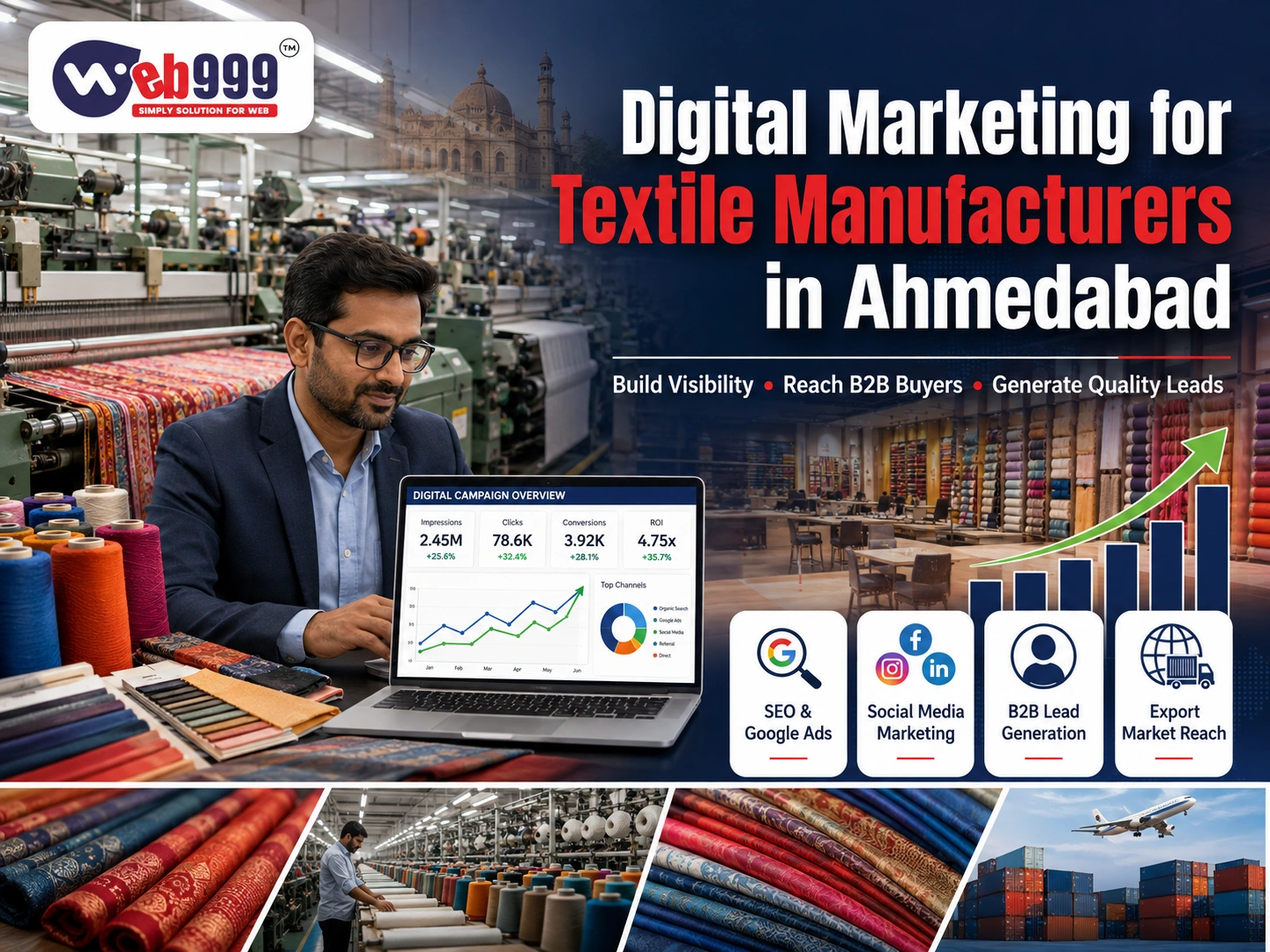
Ahmedabad has been one of India’s most important textile centres for generations. From cotton fabrics and garments to denim, home textiles, textile machinery, dyes and processing units, the city has a strong and diverse manufacturing ecosystem.
However, the way textile buyers search for manufacturers has changed significantly.
Purchase managers, wholesalers, exporters, garment companies and sourcing professionals increasingly search online before contacting a supplier. They visit websites, compare products, check specifications, read reviews and evaluate manufacturing capabilities before requesting a quotation.
This is why digital marketing for textile manufacturers in Ahmedabad has become increasingly important.
A well-planned digital marketing strategy can help textile manufacturers reach genuine buyers, professionally showcase their capabilities, improve Google visibility and generate regular B2B enquiries from Ahmedabad, across India and international markets.
Why Textile Manufacturers in Ahmedabad Need Digital Marketing
Traditional textile marketing methods such as exhibitions, brokers, references, sales representatives and direct visits continue to be valuable.
However, relying only on traditional marketing can limit your reach.
Digital marketing allows your company to remain visible when potential customers actively search for the textile products you manufacture.
Benefits of Digital Marketing for Textile Businesses
A strong online presence can help manufacturers:
- Reach wholesalers and retailers
- Connect with garment manufacturers
- Find buyers across India
- Reach international buyers
- Generate product-specific enquiries
- Display manufacturing facilities
- Showcase production capabilities
- Promote new fabrics and collections
- Build credibility
- Reduce excessive dependence on brokers
- Track marketing performance
Your Website Works as a Digital Sales Representative
Potential customers can research your products even when your sales team is unavailable.
Build Visibility Around Buyer Intent
The objective should not simply be to attract more website visitors. Your strategy should focus on reaching businesses genuinely interested in purchasing your textile products.
1. Build a Professional Textile Manufacturing Website
A professional website is the foundation of digital marketing for a textile manufacturing company.
Your website can work as an:
- Online catalogue
- Company profile
- Product showcase
- Manufacturing portfolio
- Lead-generation platform
What Should Buyers Understand From Your Website?
Visitors should quickly understand:
- What products you manufacture
- Which industries you serve
- Where your manufacturing facility is located
- Whether you accept bulk orders
- Your production capacity
- Product specifications
- How to request samples
- How to request quotations
Essential Pages for a Textile Manufacturing Website
A professional website should contain:
- Company profile
- Product categories
- Individual product pages
- High-quality photographs
- Fabric specifications
- Available colours
- Patterns and designs
- Production capacity
- Quality-control information
- Manufacturing-unit photographs
- Certifications
- Packaging details
- Export-market information
- Enquiry form
- Call button
- WhatsApp button
Make the Website Mobile Friendly
Many potential buyers will first visit your website using a smartphone.
Test Every Important Action on Mobile
Product pages, menus, enquiry forms, phone buttons and WhatsApp buttons should work properly on smaller screens.
2. Use SEO to Reach Textile Buyers on Google
Search Engine Optimisation, commonly known as SEO, helps your website appear in Google when potential customers search for textile products.
Important SEO Keywords for Textile Manufacturers
Potential buyers may search for phrases such as:
- Textile manufacturers in Ahmedabad
- Cotton fabric manufacturers in Ahmedabad
- Denim manufacturers in Gujarat
- Printed fabric suppliers in Ahmedabad
- Garment manufacturers in Ahmedabad
- Textile exporters from Gujarat
- Wholesale fabric suppliers in Ahmedabad
Ranking for relevant searches can bring potential buyers directly to your website.
What Does Textile SEO Include?
An effective SEO strategy can include:
- Industry-specific keyword research
- Product-page optimization
- Location-based SEO
- Original website content
- Technical SEO
- Image optimization
- Internal linking
- Blog publishing
- Google Business Profile optimization
- Relevant backlink building
Avoid Keyword Stuffing
SEO is not simply about repeating the same keyword throughout every paragraph.
Write for Buyers First
Your pages should answer genuine customer questions while using relevant keywords naturally.
3. Create Separate SEO Pages for Major Textile Products
One common problem with manufacturing websites is placing the complete product catalogue on a single page.
This can make it difficult for buyers and search engines to understand individual product offerings.
Create Dedicated Product Pages
A textile manufacturer could create individual pages for:
- Cotton fabrics
- Polyester fabrics
- Printed fabrics
- Denim fabrics
- Uniform fabrics
- Dress materials
- Home furnishing fabrics
- Industrial textiles
- Knitted fabrics
- Woven fabrics
What Information Should a Textile Product Page Include?
Depending on the product, mention:
- Fabric composition
- GSM
- Width
- Weave
- Colours
- Patterns
- Applications
- Minimum order quantity
- Packaging
- Customization options
- Product images
Detailed Pages Can Attract Specific Buyers
A buyer looking specifically for uniform fabric may be more interested in a dedicated uniform-fabric page than a generic page containing every textile product.
Target Commercial Search Intent
Product pages should be structured around the terminology genuine buyers use when searching for manufacturers and suppliers.
4. Optimize Google Business Profile for Your Textile Company
Google Business Profile can help textile manufacturers improve their local visibility.
It is particularly useful for businesses targeting buyers in Ahmedabad and surrounding industrial areas.
Complete Your Business Information
Your profile should contain:
- Correct business name
- Factory or office address
- Updated phone number
- Website
- Business hours
- Relevant business category
- Product photographs
- Factory photographs
- Google Maps location
- Genuine customer reviews
Keep Business Information Consistent
Your business name, address and contact details should remain consistent across your:
- Website
- Google Business Profile
- Relevant business directories
Encourage Genuine Customer Reviews
Satisfied customers can be encouraged to leave honest reviews.
Never Depend on Fake Reviews
Artificial reviews may damage credibility. Genuine feedback provides more meaningful trust signals for potential customers.
5. Use Social Media Marketing for Textile Products
Textiles are highly visual products, making social media useful for manufacturers.
Best Social Platforms for Textile Manufacturers
Instagram and Facebook can help showcase:
- Fabrics
- Colours
- Patterns
- Collections
- Manufacturing videos
- Finished products
LinkedIn can help reach professional audiences such as:
- Business owners
- Purchase managers
- Exporters
- Sourcing professionals
Social Media Content Ideas for Textile Manufacturers
Content can include:
- New fabric launches
- Fabric close-up videos
- Factory walkthroughs
- Printing processes
- Dyeing processes
- Stitching work
- Finishing processes
- Quality-testing procedures
- Packaging videos
- Dispatch videos
- Customer feedback
- Exhibition participation
- Company achievements
- Behind-the-scenes content
Do Not Publish Random Content Just to Stay Active
Every post does not need to directly sell a product, but it should support your brand positioning.
Use Content to Build Buyer Confidence
Show potential customers how your products are manufactured, tested, packed and delivered.
6. Generate Textile Enquiries With Google Ads
SEO is generally a longer-term strategy.
Google Ads can help manufacturers reach potential customers more quickly when those customers actively search for specific products.
Google Ads Keywords for Textile Manufacturers
Campaigns can target commercially relevant searches such as:
- Bulk cotton fabric supplier in Ahmedabad
- Uniform fabric manufacturer in Gujarat
- Printed fabric exporter from India
- Denim fabric manufacturer for bulk orders
- Wholesale textile supplier in Ahmedabad
Send Ads to Relevant Product Pages
Each advertisement should lead to the most relevant product or landing page.
Example of Better Landing-Page Targeting
If an advertisement promotes uniform fabrics, visitors should reach a page explaining:
- Uniform fabric varieties
- Specifications
- Colours
- Product images
- MOQ
- Manufacturing capabilities
- Enquiry options
Avoid Sending Every Ad to Your Homepage
A dedicated page provides information directly related to the buyer’s search and makes the next step clearer.
7. Use LinkedIn for B2B Textile Marketing
LinkedIn can be useful for textile manufacturers targeting professional buyers.
Who Can Textile Manufacturers Reach on LinkedIn?
Potential audiences include:
- Purchase managers
- Garment manufacturers
- Fashion brands
- Textile wholesalers
- Export houses
- Buying agents
- Interior furnishing businesses
- Sourcing professionals
What Should You Post on LinkedIn?
Your company page can share:
- New products
- Manufacturing achievements
- Industry information
- Export updates
- Certifications
- Exhibition participation
- Factory improvements
Use Personalized B2B Outreach
Direct outreach can also help manufacturers start conversations with potential buyers.
Avoid Sending the Same Message to Everyone
Briefly introduce your company and explain why your specific products may be relevant to the recipient.
8. Create SEO Blog Content for Your Textile Website
Blogging can improve search visibility while demonstrating industry knowledge.
Instead of publishing only promotional articles, answer questions textile buyers genuinely ask.
Blog Ideas for Textile Manufacturers
Useful topics include:
- How to select the right fabric manufacturer
- Cotton fabric vs polyester fabric
- Understanding fabric GSM
- Quality checks before ordering fabric
- How to place a bulk textile order
- Benefits of sourcing textiles from Ahmedabad
- How to choose fabric for garment manufacturing
- Different types of textile printing
- How to find a reliable textile exporter
- Latest fabric trends for garment businesses
Why Informational Content Matters
Not every potential customer begins by searching directly for a supplier.
Some buyers start by researching products, specifications or sourcing questions.
Answer Questions Before Buyers Contact You
Useful articles can introduce your business during the research stage.
Connect Blog Posts With Product Pages
Relevant internal links can guide readers from educational content toward your products and enquiry pages.
9. Use WhatsApp Marketing for Textile Buyers
WhatsApp is commonly used by textile buyers for quick business communication.
How Textile Manufacturers Can Use WhatsApp
Businesses can use WhatsApp to:
- Share digital catalogues
- Introduce new collections
- Send product photographs
- Follow up on enquiries
- Provide sample details
- Share stock updates
- Confirm orders
- Send dispatch updates
Make WhatsApp Enquiries Easy
Your website can provide visible WhatsApp buttons on important product and contact pages.
Respond to Enquiries Promptly
A buyer requesting product information may also be contacting several other suppliers.
Prepare Essential Sales Information
Keep catalogues, specifications, MOQ details and product photographs organized so your sales team can respond efficiently.
10. Use Email Marketing for B2B Customers
Email marketing can help textile businesses maintain relationships with:
- Distributors
- Wholesalers
- Existing customers
- Export buyers
- Business partners
What Can Textile Email Campaigns Include?
Emails can share:
- New collections
- Digital catalogues
- Product launches
- Company updates
- Exhibition invitations
- Important stock information
Keep Communication Relevant
Messages should be professional and useful to the recipient.
Avoid Excessive Promotional Emails
Sending too many irrelevant messages can harm your company’s reputation and reduce engagement.
11. Promote Your Textile Manufacturing Business Internationally
Ahmedabad textile manufacturers targeting overseas buyers need an export-focused digital presence.
What Do International Textile Buyers Look For?
International buyers may evaluate:
- Product specifications
- Minimum order quantities
- Export experience
- Production capacity
- Certifications
- Customization facilities
- Private-label options
- Packaging standards
- Countries served
- Shipping information
Build Export-Focused Website Pages
Important export information should be easy to locate on your website.
Use International Digital Marketing
Depending on the target market, manufacturers can use:
- International SEO
- Google Ads
- LinkedIn marketing
- Export-focused landing pages
Target Selected Markets
Rather than trying to reach every country, focus your campaigns around markets that match your manufacturing capacity and business goals.
12. Build Trust With Factory Photos and Technical Information
Potential buyers may hesitate to contact a manufacturer when its website appears incomplete or outdated.
Trust-Building Content for Textile Manufacturers
Your website can display:
- Genuine factory photographs
- Machinery
- Production facilities
- Quality-control procedures
- Product specifications
- Certifications
- Client testimonials
- Packaging methods
- Dispatch processes
- Manufacturing experience
- Industries served
- Markets served
Use Original Images and Videos
Original visual content allows buyers to understand your actual manufacturing capabilities.
Avoid Relying Only on Stock Photography
Generic images do not demonstrate what your factory can produce.
Show the Real Business
Authentic images of machinery, production, staff, products, testing and packaging can make your website more informative and credible.
13. Track Digital Marketing Performance
Every digital marketing activity should be measured.
Important Metrics for Textile Manufacturers
Track:
- Website visitors
- Google keyword rankings
- Product-page views
- Phone enquiries
- WhatsApp enquiries
- Enquiry-form submissions
- Catalogue downloads
- Advertising cost per enquiry
- Locations generating enquiries
- Lead-to-order conversion rate
Traffic Alone Does Not Equal Success
A website receiving thousands of irrelevant visitors may be less valuable than one receiving fewer visitors who are genuine buyers.
Track Qualified B2B Leads
Marketing reports should distinguish between general traffic and genuine sales opportunities.
Connect Marketing With Orders
Where possible, track which channels and campaigns generate enquiries that eventually become customers.
Common Digital Marketing Mistakes Textile Manufacturers Should Avoid
Even a large marketing budget can be wasted if the strategy is poorly planned.
Using Low-Quality Product Photographs
Buyers need clear visual information before requesting samples or quotations.
Listing Every Product on One Page
Separate important product categories to improve navigation and search visibility.
Copying Competitors’ Content
Original content can explain your own manufacturing capabilities more accurately.
Ignoring Mobile Website Performance
Your website should work properly across smartphones and tablets.
Using Very Broad Advertising Keywords
Broad campaigns may generate irrelevant clicks and consume advertising budget.
Publishing Social Media Content Irregularly
Create a realistic content schedule instead of posting occasionally and then remaining inactive.
Keeping Outdated Product Information Online
Regularly review product specifications, contact information and important company details.
Responding Slowly to Enquiries
Fast, professional communication can improve your chances of converting an enquiry into a business opportunity.
Buying Fake Followers or Reviews
Artificial engagement does not create genuine buyer relationships.
Focus on Qualified Leads Instead of Vanity Metrics
Follower counts and website traffic should not be your only measures of success.
Measure Marketing by Business Outcomes
Track genuine enquiries, quotations, qualified leads and orders wherever possible.
Digital Marketing Strategy for Textile Manufacturers in Ahmedabad
An effective strategy does not require using every available marketing channel immediately.
Step 1: Build a Professional Website
Create a fast, responsive website containing detailed product and manufacturing information.
Step 2: Create Individual Product Pages
Develop optimized pages for your major products.
Step 3: Start SEO
Target relevant product, industry and location-based searches.
Step 4: Optimize Google Business Profile
Improve your local presence and maintain accurate company information.
Step 5: Build Professional Social Media Content
Showcase your products, manufacturing process and business capabilities.
Step 6: Test Google Ads
Use paid search campaigns for important commercial keywords.
Step 7: Build B2B Relationships
Use LinkedIn, WhatsApp and email to maintain professional communication.
Review Performance Regularly
Measure which channels generate genuine enquiries.
Invest More in What Generates Qualified Buyers
Marketing decisions should be based on enquiry quality and business results rather than assumptions.
How Web999 Can Help Textile Manufacturers in Ahmedabad
Textile manufacturers need more than an attractive website.
They need an online presence that clearly presents their products, appears for relevant Google searches and encourages genuine buyers to enquire.
Digital Marketing Services for Textile Companies
Web999 helps Ahmedabad businesses with:
- Responsive website development
- SEO-friendly website structures
- Product-page optimization
- Content development
- Search Engine Optimisation
- Social media marketing
- Paid advertising support
Digital Strategies Based on Your Textile Business
Every textile company has different products, markets and buyers.
Suitable for Different Textile Businesses
Digital strategies can be developed for companies manufacturing:
- Fabrics
- Garments
- Textile chemicals
- Textile machinery
- Finished textile products
Focus on Your Target Market
The strategy should reflect your products, production capabilities, target locations and business goals.
Conclusion: Grow Your Textile Manufacturing Business Online
Ahmedabad has a strong textile manufacturing ecosystem, but manufacturers are competing for buyers across cities, states and international markets.
A professional website, SEO, Google Ads, social media content and B2B outreach can help textile manufacturers improve visibility and reach potential customers.
Digital Marketing Is About Generating Business Opportunities
The objective is not simply to gain followers or increase website traffic.
Reach Buyers Who Need Your Products
Digital marketing should help connect your textile business with wholesalers, exporters, garment companies, sourcing professionals and purchase managers.
Looking to Grow Your Textile Business Online?
Contact Web999 for website development, SEO and digital marketing services in Ahmedabad.
Call: +91 99044 34226
Website: www.web999.in