
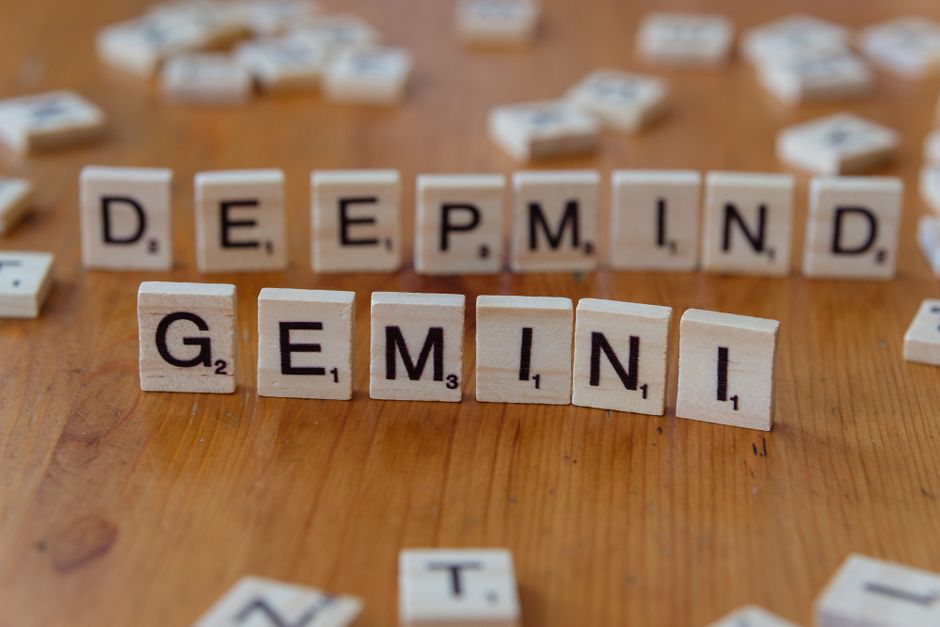
The world of website development and design is constantly evolving. Just when you think you’ve got a handle on the latest trends, a new technology emerges that promises to change everything. Lately, the buzz has been all about AI, specifically large language models like Google’s Gemini and OpenAI’s ChatGPT. While these tools are often discussed in the context of content creation or customer service, their impact on website development itself is often overlooked. But what does this AI revolution actually mean for your website development strategy? Are you prepared to leverage these powerful tools, or will you be left behind?
Beyond the Hype: Practical Applications of Gemini and ChatGPT in Website Development
It’s easy to get caught up in the futuristic promises of AI, but for website developers and business owners, the key is to focus on practical, actionable applications. Gemini and ChatGPT aren’t just fancy chatbots; they can be powerful allies in streamlining your website development process, enhancing user experience, and even boosting your SEO efforts.
1. Supercharging Content Creation and Optimization
This is perhaps the most obvious application, but its depth is often underestimated. Beyond simply writing blog posts, these AI models can:
- Generate diverse content formats: Think product descriptions, landing page copy, FAQs, social media updates, and even video scripts. This saves immense time and resources.
- Optimize existing content for SEO: Feed your current website copy into Gemini or ChatGPT and ask for suggestions on keyword integration, readability improvements, and alternative phrasing that aligns with current search trends. They can identify gaps and suggest areas for expansion.
- Brainstorm content ideas: Struggling to come up with fresh topics for your blog or social media? AI can analyze your niche and competitor content to suggest innovative and relevant ideas that resonate with your target audience.
- Personalize user experiences: Imagine tailoring website content dynamically based on user behavior or past interactions. While complex, AI can assist in generating variations of content that can be served to different user segments.
2. Enhancing Website Design and User Experience (UX)
While AI won’t replace the creative vision of a human designer, it can certainly augment their capabilities:
- Generate design concepts and mood boards: Describe your desired aesthetic, target audience, and brand personality, and AI can provide visual inspiration and even suggest color palettes, typography, and layout ideas.
- Assist with wireframing and prototyping: AI can help generate basic wireframe structures based on your functional requirements, allowing designers to iterate faster.
- Analyze user flow and identify friction points: By processing data from user testing or analytics, AI can highlight areas where users might be getting stuck or confused, leading to more intuitive website navigation.
- Craft compelling microcopy: Small but crucial bits of text like button labels, error messages, and form field hints can significantly impact UX. AI can help generate clear, concise, and user-friendly microcopy.
3. Streamlining Development Workflows
For developers, AI can be a powerful coding assistant:
- Code generation and debugging: AI can write boilerplate code, suggest code snippets, and even help identify and fix bugs, significantly speeding up the development cycle.
- Explaining complex code: If you’re working with legacy code or unfamiliar libraries, AI can provide clear explanations, making it easier to understand and modify.
- Automating repetitive tasks: From generating documentation to creating unit tests, AI can handle many of the tedious, repetitive tasks that consume developer time.
4. Revolutionizing SEO and PPC Strategies
The impact of AI on search engine optimization and pay-per-click advertising is profound:
- Advanced keyword research: AI can analyze vast amounts of data to identify long-tail keywords, user intent behind searches, and emerging search trends that might be missed by traditional tools.
- Optimizing ad copy for PPC: AI can generate multiple variations of ad headlines and descriptions, testing them for effectiveness and suggesting improvements to maximize click-through rates.
- Predictive analytics for SEO: AI can help forecast the potential impact of SEO changes, identify high-potential content opportunities, and even predict algorithm updates.
- Personalized ad targeting: AI can analyze user data to create highly segmented audiences for PPC campaigns, ensuring your ads are shown to the most relevant users.
Gemini vs. ChatGPT: Which AI Tool is Right for Your Website Development Needs?
While both Gemini and ChatGPT are incredibly capable, they have distinct strengths. The choice often depends on your specific needs and existing tech stack.
Gemini: The Integrated Powerhouse
As a Google product, Gemini has the advantage of deep integration with the Google ecosystem. This means it can potentially leverage real-time data from Google Search, Google News, and other Google services more effectively. For website development, this could translate to:
- More accurate and up-to-date SEO insights: Gemini’s access to Google’s knowledge graph and real-time search data could make its SEO recommendations particularly potent.
- Understanding of Google News trends: If your website focuses on news or current events, Gemini’s understanding of the Google News landscape could be invaluable for content strategy.
- Seamless integration with Google Ads: Expect tighter integration with Google Ads for PPC optimization and campaign management.
ChatGPT: The Versatile Innovator
ChatGPT, particularly the more advanced GPT-4, is known for its remarkable versatility and creative output. It excels at:
- In-depth content generation: If you need highly creative and nuanced written content, ChatGPT often shines.
- Complex problem-solving and coding assistance: Its ability to understand and generate code across various languages is a significant advantage for developers.
- Broader conversational capabilities: While Gemini is improving rapidly, ChatGPT has a longer track record of sophisticated conversational interactions, which can be useful for simulating user queries or chatbot development.
The Reality: Complementary Tools
In many cases, you won’t need to choose just one. The most effective strategy might involve using both Gemini and ChatGPT for different aspects of your website development and marketing efforts. For instance, you might use ChatGPT for initial content brainstorming and code generation, and then leverage Gemini for fine-tuning SEO based on real-time Google trends and optimizing your Google Ads campaigns.
Integrating AI into Your Website Development Workflow: Practical Steps
Adopting AI doesn’t have to be an overnight overhaul. Here’s how to start integrating it practically:
- Start Small: Identify one specific pain point in your current workflow that AI could address. This could be generating social media captions, writing meta descriptions, or assisting with basic code snippets.
- Experiment with Prompts: The quality of AI output is heavily dependent on the quality of your prompts. Learn to craft clear, specific, and context-rich prompts to get the best results.
- Focus on Augmentation, Not Replacement: View AI as a tool to enhance human capabilities, not replace them. Human oversight, creativity, and critical thinking remain essential.
- Stay Updated: The AI landscape is evolving at breakneck speed. Dedicate time to learning about new features, updates, and best practices for tools like Gemini and ChatGPT.
- Measure and Iterate: Track the impact of AI-assisted tasks on your efficiency, output quality, and key performance indicators (KPIs). Use this data to refine your approach.
FAQ: Your AI and Website Development Questions Answered
Q1: Will AI replace website developers?
It’s highly unlikely that AI will completely replace human website developers. While AI can automate many tasks, the need for creativity, strategic thinking, problem-solving, and understanding complex client requirements will remain. AI will likely evolve into a powerful assistant that augments developer capabilities, allowing them to focus on higher-level tasks.
Q2: How can I ensure my AI-generated content is original and not plagiarized?
While AI models are trained on vast datasets, they generate original content based on their training. However, it’s always a good practice to use plagiarism checkers on any AI-generated content, especially for critical pieces like blog posts or website copy. Furthermore, always review and edit AI output to ensure it aligns with your brand voice and factual accuracy.
Q3: Is it expensive to use Gemini or ChatGPT for website development?
Both Gemini and ChatGPT offer free tiers with certain limitations. Paid versions, which offer more advanced features, higher usage limits, and faster processing, are available through subscriptions or API access. For many small to medium-sized businesses, the free or lower-cost tiers can provide significant value, and the ROI from increased efficiency can easily justify the cost of premium versions.
Q4: How does AI impact SEO beyond content creation?
AI is transforming SEO in numerous ways, including advanced keyword research that uncovers user intent, predictive analytics for identifying content gaps, and the optimization of technical SEO elements. For PPC, AI can automate bid management, optimize ad creative, and segment audiences more effectively than ever before.
Q5: Should I be worried about Google penalizing my site for using AI-generated content?
Google’s stance is that content is judged on its quality and helpfulness to users, regardless of how it was created. The key is to ensure that any AI-generated content is high-quality, original, accurate, and provides value to your audience. Low-quality, unedited AI-generated content that is simply churned out to manipulate search rankings is what Google aims to devalue.
The Future is Now: Embracing AI in Your Website Development Journey
The integration of AI tools like Gemini and ChatGPT into website development is not a distant possibility; it’s a present reality. By understanding their practical applications and strategically incorporating them into your workflow, you can gain a significant competitive edge. Whether you’re looking to streamline content creation, enhance user experience, or supercharge your SEO and PPC efforts, these AI models offer powerful solutions. The businesses that embrace this AI revolution now will be the ones leading the pack in the years to come. It’s time to move beyond the hype and start building with AI.
