
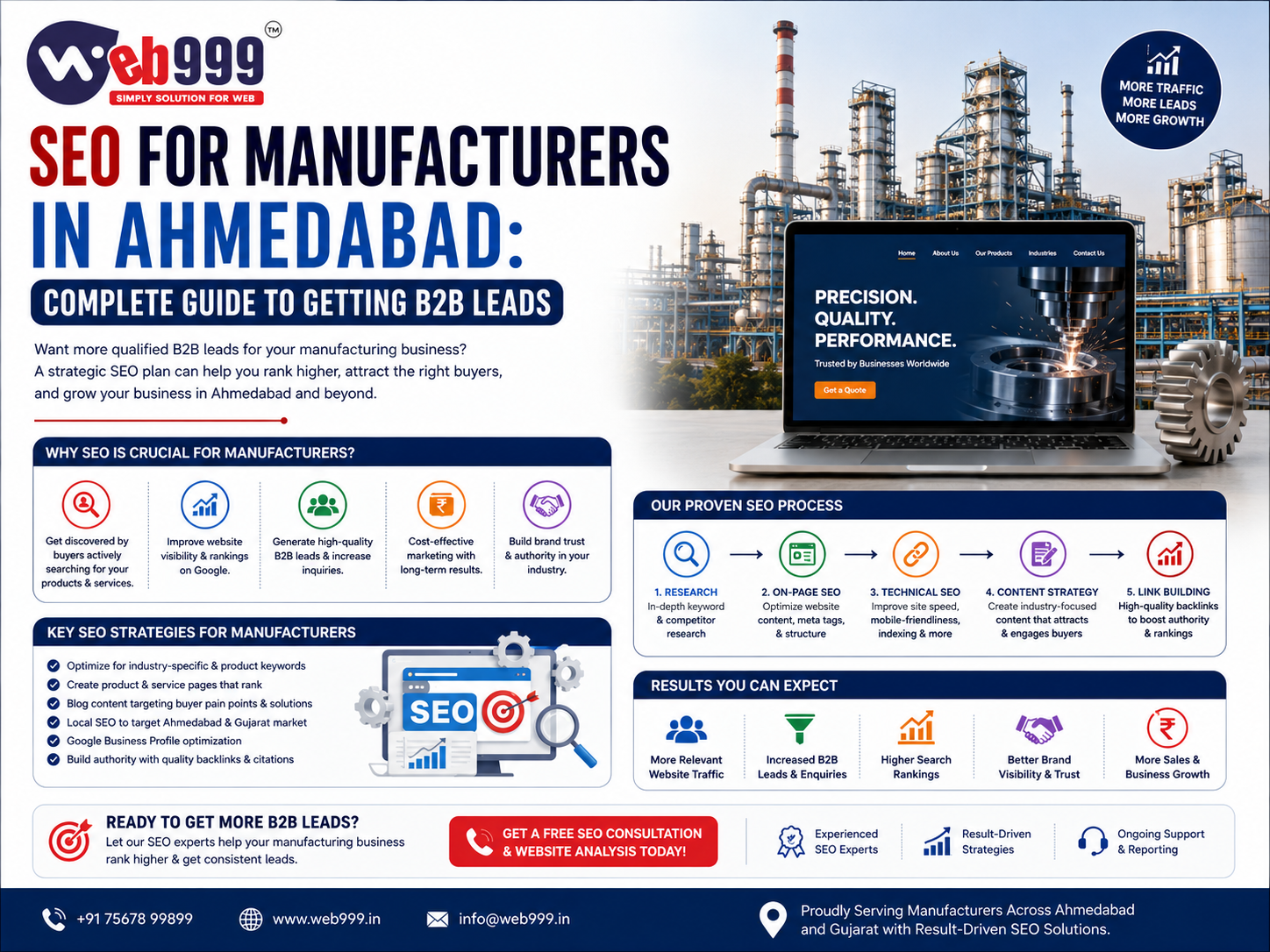
Ahmedabad is one of Gujarat’s most important industrial centres.
From engineering and machinery to chemicals, pharmaceuticals, textiles, packaging, plastics and industrial equipment, thousands of manufacturers compete for business from buyers across India and overseas.
But the way B2B buyers find suppliers has changed.
A purchase manager looking for a CNC machine manufacturer in Ahmedabad may start with Google.
A distributor searching for a packaging machinery supplier in Gujarat may do the same.
An overseas buyer looking for an industrial pump manufacturer in India may shortlist companies based entirely on what they find online.
If your manufacturing company doesn’t appear when these searches happen, those enquiries are likely going to your competitors.
This is where SEO for manufacturers in Ahmedabad becomes valuable.
SEO isn’t simply about getting more website visitors.
For a manufacturing company, the real objective is to attract relevant buyers, distributors, dealers, procurement teams and businesses that are actively searching for the products you manufacture.
This guide explains how manufacturers can use SEO to generate better B2B enquiries and build long-term visibility on Google.
What Is SEO for Manufacturing Companies?
SEO, or Search Engine Optimization, is the process of improving your website so that it has a better chance of appearing when potential customers search for products and services related to your business.
For example, suppose you manufacture industrial valves in Ahmedabad.
Potential customers might search Google for:
- Industrial valve manufacturer in Ahmedabad
- Industrial valve manufacturer in Gujarat
- Industrial valve supplier in India
- Stainless steel valve manufacturer
- Industrial valve exporter India
These aren’t random visitors.
Someone making searches like these may already be looking for a manufacturer or supplier.
That’s why manufacturing SEO should focus on buyer intent, not simply website traffic.
Getting 500 relevant visitors from businesses searching for your products can be much more valuable than getting 10,000 visitors who have no intention of buying.
Why Is SEO Important for Ahmedabad Manufacturers?
Many traditional manufacturers have built successful businesses through:
- Dealers
- Distributors
- Trade exhibitions
- Referrals
- Sales teams
- IndiaMART
- TradeIndia
- Direct marketing
- Existing customer relationships
These channels can continue to work.
SEO doesn’t necessarily replace them.
It gives your business another way to generate opportunities.
The difference is that instead of your sales team always searching for customers, SEO can help customers discover your company while they are already searching for a manufacturer.
That makes Google an important B2B lead-generation channel.
How B2B Buyers Search for Manufacturers
Imagine you are a purchase manager in Pune and need a packaging machine.
You might search:
“automatic packaging machine manufacturer in Ahmedabad”
You open a few websites.
Company A
A professional website with detailed machine specifications, applications, videos, certifications and an easy enquiry form.
Company B
An outdated website containing only a homepage and contact number.
Company C
Doesn’t appear on Google at all.
Which companies are more likely to receive your enquiry?
This is why SEO and website quality work together.
Ranking gets the buyer to your website.
Your website then has to convince the buyer to contact you.
Step 1: Find Keywords Your Buyers Actually Search
Keyword research is the foundation of manufacturing SEO.
One of the biggest mistakes manufacturers make is targeting only broad keywords.
For example:
“machine manufacturer”
This keyword is too broad.
A better SEO strategy targets specific searches with commercial intent.
Suppose your company manufactures laser cutting machines.
You could target:
- Laser cutting machine manufacturer Ahmedabad
- Fiber laser cutting machine manufacturer
- CNC laser cutting machine manufacturer Gujarat
- Sheet metal laser cutting machine supplier
- Industrial laser cutting machine India
These keywords clearly describe what the buyer wants.
Product + Manufacturer Keywords
For most manufacturers, these are extremely important.
Examples:
- [Product] + manufacturer
- [Product] + manufacturer in Ahmedabad
- [Product] + manufacturer in Gujarat
- [Product] + manufacturer in India
- [Product] + supplier
- [Product] + exporter
The actual keyword strategy should depend on your products and target market.
Step 2: Create a Separate Page for Important Products
This is one of the most important SEO improvements a manufacturing company can make.
Don’t put 20 different products on one generic Products page.
Suppose you manufacture:
- Industrial pumps
- Centrifugal pumps
- Chemical process pumps
- High-pressure pumps
- Stainless steel pumps
Ideally, important product categories should have their own dedicated pages.
Example URLs
- yourwebsite.com/centrifugal-pumps/
- yourwebsite.com/chemical-process-pumps/
- yourwebsite.com/high-pressure-pumps/
This gives Google a clear page to understand and rank for each product.
It also gives buyers more useful information.
Step 3: Don’t Make Product Pages Look Like a Catalogue
A common manufacturing website mistake is creating product pages containing:
- Product Name
- One Image
- Model Number
- Contact Us
That’s not enough.
A serious B2B buyer may want much more information before sending an enquiry.
A Strong Manufacturing Product Page Can Include
- Product overview
- Features
- Technical specifications
- Applications
- Available models
- Materials
- Capacity
- Dimensions
- Industries served
- Product images
- Product videos
- Downloadable catalogue
- Frequently asked questions
- Enquiry form
- WhatsApp or call option
Think of your product page as your 24/7 technical salesperson.
It should answer as many buyer questions as possible.
Step 4: Target Ahmedabad, Gujarat, India and Export Markets Properly
A manufacturer based in Ahmedabad doesn’t necessarily sell only in Ahmedabad.
Your customers may come from:
- Ahmedabad
- Vadodara
- Rajkot
- Surat
- Pune
- Mumbai
- Hyderabad
- Chennai
- Delhi
- Bengaluru
Or even outside India.
Your SEO strategy should reflect your actual service area.
For example, a manufacturer could naturally target:
Product manufacturer in Ahmedabad
and broader terms such as:
- Product manufacturer in Gujarat
- Product manufacturer in India
If you export products, you may also need content focused on international buyers.
But don’t create hundreds of almost identical city pages by simply changing the city name.
Useful location pages need genuine, relevant information.
Step 5: Optimize Your Homepage
Your homepage should quickly explain:
- What do you manufacture?
- Where are you located?
- Who do you supply?
- Why should buyers trust you?
- How can they contact you?
A visitor shouldn’t need to spend two minutes figuring out what your company does.
For example, instead of a vague headline such as:
“Welcome to ABC Industries”
a more descriptive heading could be:
Industrial Packaging Machine Manufacturer in Ahmedabad, Gujarat
That immediately gives visitors and search engines useful context.
Your Homepage Can Also Highlight
- Main products
- Industries served
- Years of experience
- Manufacturing capabilities
- Certifications
- Export countries
- Client industries
- Quality standards
- Contact CTA
Keep it useful rather than stuffing keywords everywhere.
Step 6: Improve Your Google Business Profile
For manufacturers targeting Ahmedabad and nearby businesses, local SEO can also matter.
Your Google Business Profile should contain accurate information such as:
- Business name
- Address
- Phone number
- Website
- Business category
- Working hours
- Factory or office photographs
- Products
- Business description
Customer reviews can also strengthen your local presence and build trust.
If someone searches specifically for a manufacturer in Ahmedabad, your local business information can support your overall online visibility.
Step 7: Build Trust on Your Manufacturing Website
B2B buyers usually don’t make purchasing decisions as quickly as consumers.
A company may be placing an order worth lakhs of rupees.
They need confidence.
Your website should therefore provide genuine trust signals.
Useful Trust Signals
- Years in business
- Factory photographs
- Manufacturing facility
- Machinery
- Certifications
- Quality-control process
- Client testimonials
- Industries served
- Export markets
- Team information
- Company registration details where appropriate
- Case studies
- Completed projects
Avoid using generic stock photographs of factories that aren’t yours.
Real photographs of your facility, team and products are usually more convincing.
Step 8: Create Industry-Specific Pages
Your product may be used by several industries.
Instead of only discussing the product, explain how it is used in each sector.
For example, an industrial pump manufacturer might serve:
- Chemical industry
- Pharmaceutical industry
- Food processing
- Textile industry
- Water treatment
- Oil and gas
Creating genuinely useful industry pages can help you target more specific searches.
Example Industry Page URLs
- /pumps-for-chemical-industry/
- /pumps-for-pharmaceutical-industry/
These pages can explain the applications, product requirements and relevant solutions for that industry.
This also makes your website more useful for potential buyers.
Step 9: Use Blogs to Target Buyer Questions
Manufacturers sometimes say:
“Why would anyone read a blog about industrial products?”
The answer is simple.
Potential customers have questions before purchasing.
Suppose you manufacture air compressors.
Your prospects might search:
- How to choose an industrial air compressor
- Screw compressor vs piston compressor
- What size air compressor does a factory need?
- Air compressor maintenance guide
- Industrial air compressor price in India
- Best compressor for textile industry
These searches create opportunities.
A useful article can bring a potential customer to your website before they’re ready to request a quotation.
When they are ready, your company is already familiar to them.
Step 10: Focus on Long-Tail B2B Keywords
Broad keywords can be competitive.
Long-tail keywords are more specific and can often indicate stronger buying intent.
Compare:
Pump
with:
Stainless steel centrifugal pump manufacturer in Ahmedabad
The second keyword will probably have fewer searches.
But the person searching it knows exactly what they need.
For B2B SEO, lower search volume doesn’t automatically mean lower value.
One qualified industrial enquiry can be worth much more than thousands of irrelevant website visits.
Step 11: Add Clear Enquiry Options
SEO has little business value if visitors reach your website but don’t contact you.
Every important product page should make the next step obvious.
You can provide:
- Request a Quote
- Send Enquiry
- Call Now
- Download Catalogue
Your enquiry form shouldn’t unnecessarily ask for 20 fields.
Start with the information your sales team genuinely needs.
Basic B2B Enquiry Form
- Name
- Company
- Phone
- Product Requirement
- Message
The easier the enquiry process, the less friction you create for potential buyers.
Step 12: Create Downloadable Product Catalogues
Many B2B buyers want documentation they can share internally.
A downloadable PDF catalogue can be useful.
It may contain:
- Company introduction
- Product range
- Technical specifications
- Applications
- Product photographs
- Certifications
- Contact details
You can also offer separate brochures for individual product categories.
However, don’t put all important product information only inside a PDF.
Keep useful information on your website pages too, so search engines and visitors can access it easily.
Step 13: Improve Website Speed and Mobile Experience
B2B doesn’t mean desktop-only.
Purchase managers, business owners and engineers may discover your company on their phones.
Your manufacturing website should therefore work properly on:
- Smartphones
- Tablets
- Laptops
- Desktops
Important information shouldn’t require users to zoom in or struggle with menus.
Large, uncompressed factory and product photographs can also make manufacturing websites unnecessarily slow.
Optimizing images and website performance improves the experience for visitors.
Step 14: Work on Technical SEO
Good content alone isn’t enough if Google has difficulty crawling your website.
Technical SEO may involve:
- XML sitemap
- HTTPS
- Mobile responsiveness
- Clean URL structure
- Canonical tags
- Broken link fixes
- Redirect management
- Indexing checks
- Page speed
- Structured data where appropriate
- Image optimization
- Internal linking
You don’t need to understand every technical detail as a business owner.
But your SEO or website development company should.
Step 15: Build Internal Links
Internal linking connects relevant pages on your own website.
For example, a blog titled:
How to Select a Centrifugal Pump for Chemical Applications
could naturally link to your:
Chemical Process Pump
product page.
Similarly, product pages can link to:
- Related products
- Industry pages
- Technical guides
- Contact page
- Case studies
This helps visitors explore your website and helps search engines understand relationships between pages.
Step 16: Build Relevant Backlinks
Backlinks are links from other websites to yours.
For manufacturing companies, quality matters much more than collecting thousands of random links.
Relevant Backlink Opportunities
- Industry associations
- Business directories
- Supplier listings
- Trade publications
- Partner websites
- Industry blogs
- Event websites
- Exhibition websites
- Genuine PR coverage
Avoid buying thousands of cheap backlinks simply because someone promises “first-page ranking.”
Poor-quality link building can create more problems than benefits.
A sustainable SEO strategy focuses on relevance, authority and genuine business connections.
Step 17: Publish Case Studies
Case studies are particularly useful for B2B manufacturing businesses.
Instead of simply saying:
“We provide high-quality products.”
show what your company actually achieved.
Example Manufacturing Case Study
Problem
A pharmaceutical company needed a corrosion-resistant pumping solution.
Requirement
Specific flow rate and material compatibility.
Solution
Your company recommended and supplied the appropriate pump configuration.
Result
The customer improved process reliability.
Real examples demonstrate expertise much more effectively than generic marketing statements.
Make sure you have permission before publishing customer names or confidential project information.
Step 18: Add FAQs to Important Product Pages
Your sales team probably answers the same questions repeatedly.
Those questions can become useful website content.
For example:
- What is the minimum order quantity?
- Do you provide customized sizes?
- Do you export internationally?
- What materials are available?
- What is the delivery time?
- Do you provide installation?
- Can I request a technical datasheet?
Adding useful FAQs can answer buyer questions and make product pages more comprehensive.
SEO vs IndiaMART for Manufacturers
This doesn’t need to be an either-or decision.
IndiaMART and similar platforms can generate enquiries because buyers are already using them to find suppliers.
SEO works differently.
With SEO, you’re building visibility for your own website and brand.
A buyer searching Google may land directly on your website, explore your products and contact your company.
Many manufacturers can use both channels.
The difference is that improving your own website creates a digital asset that you control.
SEO vs Google Ads for B2B Manufacturing
Google Ads can bring targeted visitors relatively quickly.
SEO usually takes longer.
For example, if you’ve just launched a website and need enquiries immediately, Google Ads may help you reach people searching for your products.
SEO builds organic visibility over time.
A manufacturer can therefore use both:
Google Ads
Faster targeted visibility
SEO
Long-term organic growth
The right mix depends on your industry, competition, budget and business objectives.
How Long Does Manufacturing SEO Take?
This is one of the most common questions.
There is no guaranteed timeline.
Results depend on:
- Website age
- Existing authority
- Competition
- Target keywords
- Website quality
- Technical problems
- Content
- Backlinks
- Competitor strength
A website that already has some Google visibility may improve faster than a completely new domain.
SEO should generally be treated as a long-term marketing strategy rather than a 30-day campaign.
Be cautious when someone guarantees a specific #1 Google ranking within a few days.
No SEO agency controls Google’s rankings.
How to Measure B2B SEO Success
Don’t measure manufacturing SEO only by website traffic.
The real question is:
Is SEO helping generate business opportunities?
Important metrics can include:
- Organic search traffic
- Keyword visibility
- Product page visits
- Enquiry form submissions
- Phone calls
- WhatsApp enquiries
- Catalogue downloads
- Quote requests
- Qualified leads
Suppose your traffic increases only 20%, but qualified enquiries double.
That’s far more valuable than increasing traffic by 200% with visitors who never become customers.
Common SEO Mistakes Manufacturers Should Avoid
Many manufacturing websites struggle because of a few recurring problems.
One Page for Every Product
Putting the entire product range on one page makes it difficult to target individual product searches.
Copying Competitor Content
Changing a few words from a competitor’s website isn’t a good content strategy.
Your website should reflect your own products, specifications and expertise.
Keyword Stuffing
Writing:
“We are best pump manufacturer Ahmedabad and best pump supplier Ahmedabad Gujarat…”
doesn’t make a page better.
Write naturally for customers first.
Thin Product Pages
A product name, one photograph and two lines of text usually aren’t enough for a serious buyer.
Ignoring Mobile Users
Your B2B customers use smartphones too.
Buying Cheap Backlinks
Thousands of unrelated links aren’t a substitute for a proper SEO strategy.
No Conversion Strategy
Traffic without enquiry options doesn’t generate leads.
Example SEO Strategy for an Ahmedabad Manufacturer
Suppose a company manufactures packaging machines in Ahmedabad.
Instead of targeting only:
Packaging machine
the SEO strategy could be structured around several levels.
Homepage
Target the overall business:
Packaging Machine Manufacturer in Ahmedabad
Product Pages
Create pages for:
- Automatic Packaging Machine
- Pouch Packing Machine
- Powder Packing Machine
- Liquid Packaging Machine
- Food Packaging Machine
Industry Pages
Create useful pages for:
- Packaging Machines for Food Industry
- Packaging Machines for Pharmaceutical Industry
- Packaging Machines for Spices
- Packaging Machines for FMCG
Blog Content
Publish articles such as:
- How to Choose the Right Packaging Machine
- Automatic vs Semi-Automatic Packaging Machine
- Packaging Machine Price in India
- How to Select a Pouch Packing Machine
- Packaging Machine Maintenance Checklist
Now the website can potentially attract buyers at different stages of their research.
That’s much stronger than relying on a five-page company website.
SEO for Export-Oriented Manufacturers
Ahmedabad manufacturers that export products have an even larger opportunity.
International buyers may search for:
- Industrial machinery manufacturer India
- Chemical equipment exporter India
- Textile machinery supplier India
- Pharmaceutical equipment manufacturer India
Your website should clearly communicate export capabilities if international business is important to you.
Consider Including
- Countries served
- Export experience
- International standards
- Certifications
- Packaging process
- Shipping capabilities
- Product documentation
- Export enquiry form
The goal is to give an overseas buyer confidence that your company can handle international business.
Your Website Is Part of Your Sales Team
A manufacturing website shouldn’t be treated as a digital brochure that gets redesigned once every five years.
It can become part of your sales process.
A potential buyer can discover your company through Google at 11 PM, compare your products, check technical details, download your catalogue and send an enquiry.
Your sales team can respond the next morning.
That’s the real opportunity behind manufacturing SEO.
Why Choose Web999 for Manufacturing SEO in Ahmedabad?
At Web999, we provide website development and SEO services for businesses looking to improve their online presence and generate more relevant enquiries.
For manufacturing companies, our SEO approach can focus on areas such as:
- Manufacturing keyword research
- Product page optimization
- Local Ahmedabad SEO
- On-page SEO
- Technical SEO
- SEO-friendly website structure
- Industry-specific content
- Blog strategy
- Internal linking
- Backlink strategy
- Conversion-focused pages
The objective isn’t simply to increase traffic.
The objective is to help your manufacturing business become visible when relevant buyers are actively searching for your products.
Frequently Asked Questions About SEO for Manufacturers
Does SEO Work for Manufacturing Companies?
Yes.
SEO can be particularly valuable when buyers actively search Google for the products, machinery, equipment or industrial solutions your company provides.
How Much Does Manufacturing SEO Cost in Ahmedabad?
SEO pricing depends on the number of products, target keywords, competition, target locations, current website condition and the amount of work required.
A detailed website and competitor analysis is usually needed before providing an accurate quotation.
Can SEO Generate B2B Leads?
SEO can bring relevant potential buyers to your website.
Whether those visitors become leads also depends on your product offering, website quality, pricing, credibility and enquiry process.
Should Manufacturers Target Ahmedabad or All of India?
It depends on where you sell.
If you supply across India, your strategy shouldn’t be limited to Ahmedabad keywords.
Local, Gujarat-level and India-wide keywords can be targeted based on actual business reach.
Do Exporters Need SEO?
SEO can be useful for exporters because international buyers often research manufacturers and suppliers online before making contact.
Is Google Ads Better Than SEO for Manufacturers?
They serve different purposes.
Google Ads can provide faster visibility, while SEO focuses on building organic visibility over time.
Many businesses use both.
Do Manufacturers Need Blogs?
Not every manufacturer needs to publish articles every week.
However, useful technical and buyer-focused articles can help target informational searches, demonstrate expertise and support important product pages.
Can Web999 Optimize an Existing Manufacturing Website?
Yes.
An existing website can be reviewed for technical SEO, content, product-page structure, keywords, mobile usability and other opportunities before deciding whether optimization or a complete redesign is required.
Start Generating More B2B Opportunities from Google
Ahmedabad manufacturers already invest heavily in factories, machinery, exhibitions, sales teams and dealer networks.
Your website deserves the same business-focused thinking.
When someone searches Google for the exact product your company manufactures, your business should have the opportunity to be considered.
A strong manufacturing SEO strategy combines:
The right keywords + detailed product pages + technical SEO + useful content + authority + a website designed to generate enquiries.
That’s how SEO moves beyond rankings and becomes part of your B2B lead-generation strategy.
If your manufacturing company is based in Ahmedabad and you want to improve its Google visibility, Web999 can help you develop an SEO strategy around your products, target markets and business goals.
Looking for SEO for Your Manufacturing Company?
Contact Web999 to discuss your website, products and target locations and identify opportunities to generate more relevant B2B enquiries through Google.