
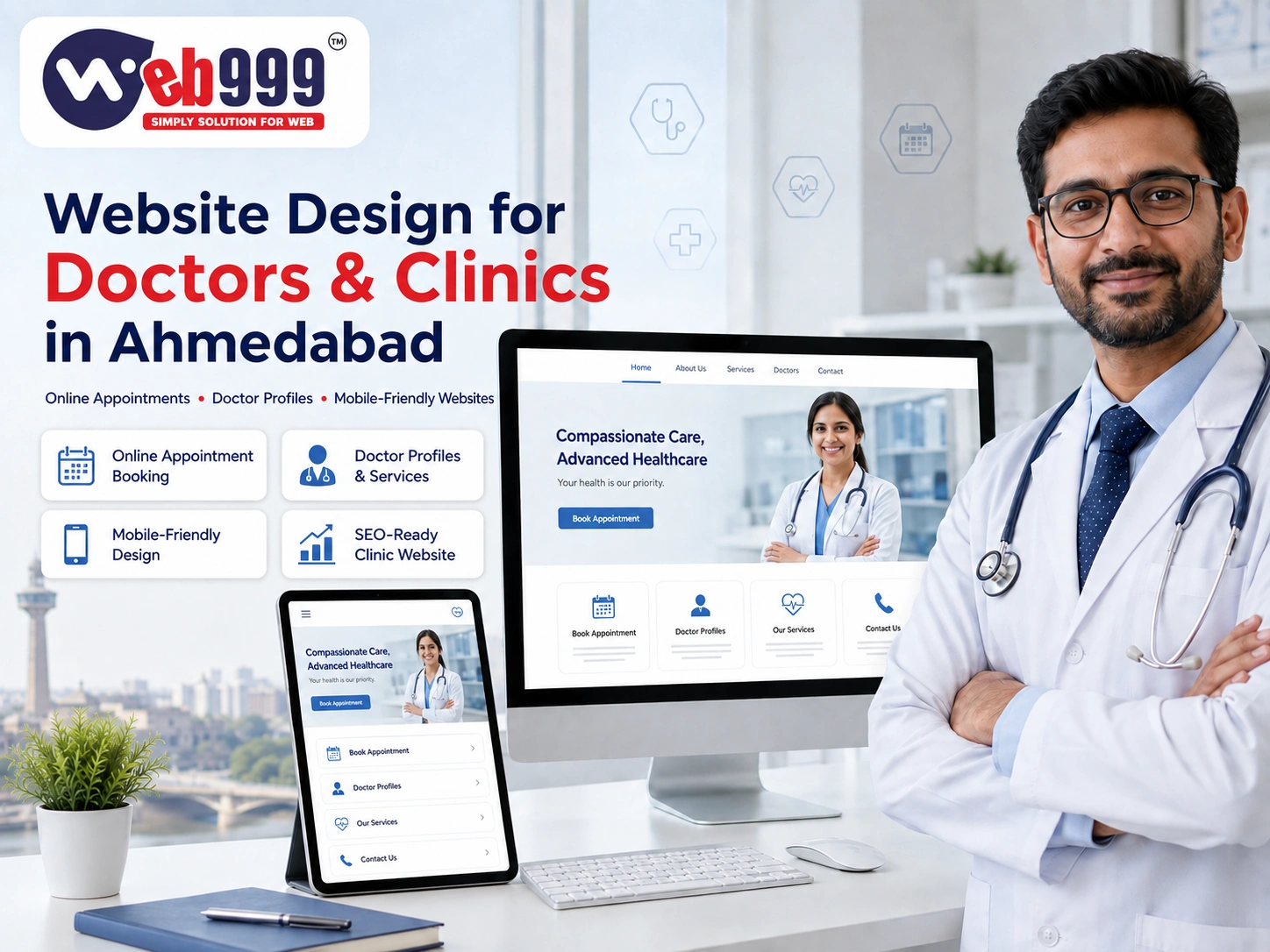
When someone needs a doctor, the search often begins on a mobile phone.
A person may look for a neurologist near them, a dental clinic in Satellite, a skin specialist in Ahmedabad or a paediatrician who is available on Sunday. They may open several websites before deciding whom to call.
At this stage, patients are not only looking at qualifications. They are also trying to understand whether the clinic appears genuine, accessible and suitable for their needs.
An outdated website can make this decision more difficult. The contact number may be hidden, appointment information may be missing, or the pages may not work properly on a phone.
A well-designed medical website should make essential information easy to find. It should explain the doctor’s experience and services clearly without using exaggerated claims or creating unrealistic expectations.
For doctors and clinics in Ahmedabad, the website is often the first interaction with a potential patient. That first experience deserves careful planning.
Why Does a Doctor Need a Website?
Some clinics depend entirely on references, hospital listings, online directories or social media.
These channels can help, but they do not provide the same level of control as an official website.
On your own website, you can present accurate information about:
- Doctor’s qualifications
- Medical speciality
- Conditions evaluated
- Treatments or procedures offered
- Clinic address
- Consultation hours
- Hospital affiliations
- Appointment process
- Emergency instructions
The website also provides one official destination that can be connected to Google Business Profile, social-media accounts, online advertisements and printed material.
Even when a patient receives the doctor’s name through a friend or another physician, they may still search online before booking an appointment.
A professional website helps confirm that they have found the correct doctor and clinic.
A Medical Website Should Reduce Confusion
A clinic website is not simply a digital visiting card.
Patients may arrive while they are worried, uncomfortable or trying to arrange care for a family member. The design should help them find answers without unnecessary effort.
Essential Information Patients Should Find Quickly
They should be able to quickly identify:
- Which doctor they are viewing
- What the doctor specializes in
- Where the clinic is located
- When consultations are available
- How to request an appointment
- Whether emergency care is available
- Which documents or reports they should bring
Important details should not be hidden behind animation, long introductions or complicated menus.
A calm, clear website usually serves a medical practice better than a design filled with distracting visual effects.
Begin With the Patient’s Main Question
Every page should be planned around what a patient wants to know.
Questions Patients May Ask
A patient visiting a doctor’s profile may ask:
- Is this the right specialist for my condition?
- What qualifications does the doctor have?
- Where does the doctor consult?
- Is prior appointment required?
- What should I bring to the consultation?
- How can I reach the clinic?
- Can I request a second opinion?
A person visiting a treatment page may want to understand symptoms, evaluation, possible treatment approaches and when medical attention may be necessary.
The content should answer these questions in plain language.
Medical terminology may be needed, but it should be explained where possible. Patients should not require a medical dictionary to understand the basic information.
Important Pages for a Doctor’s Website
The exact structure depends on the speciality and size of the clinic. Most medical websites should include the following sections.
Homepage
The homepage should immediately identify the doctor or clinic.
Essential Homepage Information
The opening section may include:
- Doctor’s name
- Medical speciality
- Main qualification
- Ahmedabad location
- Appointment button
- Telephone number
Avoid vague opening statements that do not explain the service.
“Neurologist and brain specialist in Ahmedabad” provides clearer information than a slogan such as “Experience world-class care.”
The remaining homepage can introduce the doctor, services, clinic, patient information and consultation locations.
About the Doctor
The doctor-profile page should present factual and verifiable information.
Doctor Profile Information
It may include:
- Medical qualifications
- Specialization
- Professional experience
- Training
- Areas of clinical interest
- Hospital affiliations
- Professional memberships
- Languages spoken
- Consultation locations
Keep the tone professional.
A doctor does not need to describe themselves as the “best” or “number one” to build confidence. Detailed qualifications, genuine experience and clear patient information are more meaningful.
Conditions Treated
Patients often search using a symptom or condition rather than a doctor’s exact speciality.
A neurologist’s website, for example, might contain pages related to migraine, epilepsy, stroke, movement disorders or nerve conditions.
A dental clinic may have pages for tooth pain, root-canal treatment, dental implants, braces and gum problems.
What Each Condition Page Should Explain
Each page should explain:
- What the condition or service involves
- Common symptoms or reasons for consultation
- How evaluation may be performed
- Possible treatment approaches
- When urgent care may be required
- How to request an appointment
Content should remain educational. It should not diagnose an individual reader or suggest that every patient needs the same treatment.
Treatments and Procedures
If the clinic offers particular procedures, create separate pages for the major ones.
What to Include on Treatment Pages
A treatment page should be informative but balanced. Mention potential suitability, evaluation and recovery considerations without promising a guaranteed result.
Where relevant, explain that treatment recommendations depend on individual examination, medical history and investigations.
Clinic Information
The clinic page should include practical information:
Clinic Details
- Complete address
- Recognizable landmark
- Google Map
- Consultation hours
- Appointment process
- Parking information
- Accessibility details
- Available facilities
- Reception number
- Public-transport guidance, if useful
Ahmedabad patients may travel from another part of the city. Clear directions help them plan the visit and arrive on time.
Appointment Page
Make requesting an appointment simple.
Appointment Form Fields
A basic form may ask for:
- Patient name
- Age
- Phone number
- Email address, if needed
- Preferred date
- Consultation location
- Short message
Do not ask patients to enter detailed or sensitive medical information into an ordinary website form unless the system has been properly designed to handle it.
After submission, clearly explain what happens next. Let the patient know whether the request is confirmed automatically or whether the clinic will call them.
Contact Page
Display the telephone number, address, hours and map clearly.
If the doctor consults at several hospitals or clinics, list each location separately with its own timings and contact instructions.
Do not combine multiple addresses into one confusing paragraph.
Mobile-Friendly Design Is Essential
Most patients will first open the website on a smartphone.
They may be searching while travelling, speaking with a family member or trying to arrange a quick appointment.
A medical website should work comfortably on a small screen.
Mobile Website Features
Check that:
- Text is readable
- Buttons are easy to tap
- The appointment form is short
- The telephone number can be called directly
- WhatsApp opens correctly
- Maps and directions work
- Doctor profiles load quickly
- Important details are not hidden
Avoid intrusive pop-ups that cover the entire screen before the visitor has read anything.
The appointment and call buttons should remain visible without making the design feel aggressive.
Website Speed Matters
Patients may leave if a website takes too long to open.
Large photographs, background videos and unnecessary plugins are common reasons for slow medical websites.
Ways to Improve Medical Website Speed
Speed can be improved by:
- Compressing images
- Using reliable hosting
- Loading videos efficiently
- Removing unused plugins
- Optimizing website code
- Using modern image formats
- Configuring caching
- Testing mobile performance
A fast website also supports search visibility and creates a better experience for users on slower mobile connections.
Use Genuine Photographs
Real photographs help patients recognize the doctor and clinic before they arrive.
Useful Medical Website Photographs
Useful photographs may include:
- Professional doctor portrait
- Clinic exterior
- Reception
- Consultation room
- Treatment facilities
- Medical team
- Waiting area
- Building entrance
Photographs should be recent, clear and professionally presented.
Avoid using unrelated stock photographs that make the clinic appear different from reality. Stock images can support educational pages, but they should not replace genuine doctor and clinic photographs.
Always obtain appropriate permission before publishing images that identify patients, staff members or visitors.
Keep the Design Calm and Professional
Medical websites generally benefit from clean layouts, readable fonts and restrained colours.
White, blue, green and other soft colours are commonly used because they support a calm appearance. However, the design should also match the doctor’s existing identity and clinic branding.
Design Elements to Avoid
Avoid:
- Flashing banners
- Too many bright colours
- Excessive animation
- Autoplay audio
- Difficult fonts
- Crowded pages
- Disturbing medical images
- Aggressive sales messages
The design should help visitors focus on information rather than decorative elements.
Make Medical Content Easy to Understand
A doctor may be comfortable with technical language, but patients may not be.
For example, instead of publishing only “cervical radiculopathy,” the page can explain that it may involve pain, tingling, numbness or weakness caused by irritation of a nerve in the neck.
This does not mean oversimplifying medical information. It means giving readers enough context to understand why they may need professional evaluation.
Medical Content Quality
Every article should be reviewed for medical accuracy before publication.
Include the author or medical reviewer where appropriate, along with a publication or update date. This provides transparency and makes future content reviews easier.
Avoid Misleading Medical Claims
Medical websites should communicate carefully.
Claims to Avoid
Avoid statements such as:
- Guaranteed cure
- 100% successful treatment
- Permanent result for every patient
- No risk
- Best doctor in India
- Number-one clinic without evidence
- Surgery is always unnecessary
- Surgery is always required
Outcomes vary according to the individual patient, diagnosis, stage of illness and several other factors.
Use balanced language. Explain that diagnosis and treatment decisions require professional assessment.
Testimonials should not be presented as proof that every patient will receive the same result.
Add Clear Emergency Information
A website appointment form should not be treated as an emergency service.
Where appropriate, include a short notice explaining that patients with severe or sudden symptoms should seek immediate medical assistance rather than waiting for an online response.
The exact warning will depend on the speciality.
Example: Neurological Emergency Information
For example, a neurological website may advise urgent emergency care for sudden weakness, facial drooping, speech difficulty, seizures or a severe sudden headache.
Emergency information should be brief, clear and visible on relevant pages. It should not create unnecessary fear.
Protect Patient Privacy
Clinic websites may collect names, phone numbers and appointment information.
Collect only the information needed for the stated purpose and protect access to it.
Essential Medical Website Security
The website should use HTTPS security, updated software and properly secured forms.
It should also provide suitable privacy information explaining how submitted details are used.
Avoid requesting extensive medical histories, reports or identification documents through an ordinary unsecured form.
If the website allows report uploads, online consultations or access to medical records, it requires more careful technical and privacy planning than a basic appointment form.
Add Online Appointment Booking Carefully
Online appointment booking can save time for both patients and reception staff.
Appointment Booking Features
A booking system may allow users to:
- Choose consultation location
- Select date
- Request a time slot
- Receive confirmation
- Reschedule or cancel
- Receive reminders
Decide whether appointments will be instantly confirmed or reviewed by the clinic.
For many practices, a request-and-confirm system is more practical because schedules can change.
Test the Appointment System
Test the booking process before launch. A form that accepts requests but never alerts the reception team creates a poor patient experience.
WhatsApp Integration: Useful but Controlled
Many Ahmedabad patients prefer communicating through WhatsApp.
A WhatsApp button can make appointment enquiries convenient, but the clinic should define how it will be used.
WhatsApp Appointment Message
The automated opening message might say:
“Hello, I would like to request an appointment with Dr. [Name].”
Avoid asking patients to share detailed medical histories publicly or through an uncontrolled messaging process.
Display expected response hours so patients do not assume that messages are monitored continuously.
Search Engine Optimization for Doctors
A well-designed website should also be easy for Google to understand.
Medical Website SEO Strategies
SEO for a doctor or clinic may involve:
- Speciality-related keyword research
- Individual condition pages
- Treatment pages
- Ahmedabad location information
- Clear page titles
- Structured headings
- Internal links
- Mobile responsiveness
- Website speed
- Local Business or appropriate organization data
- Google Search Console
- Google Analytics
Use keywords naturally.
Repeating “best doctor in Ahmedabad” in every paragraph does not provide useful information. Pages should answer real patient questions and accurately represent the doctor’s services.
Local SEO and Google Maps
A doctor’s website should be connected to an accurate Google Business Profile.
Google Business Profile Information
The profile may display:
- Doctor or clinic name
- Category
- Address
- Phone number
- Consultation hours
- Website
- Directions
- Reviews
- Photographs
Keep this information consistent with the website.
Multiple Clinic Locations
If the doctor consults at multiple genuine locations, each eligible profile and website page should provide accurate location-specific information.
Do not create profiles at fake addresses or use keyword-filled business names. Such shortcuts can create verification and suspension problems.
Patient Reviews and Reputation
Many patients read reviews before choosing a clinic.
Clinics can request honest feedback from genuine patients, provided the request is handled appropriately.
Guidelines for Patient Reviews
Do not purchase reviews or tell patients exactly what to write.
Reply professionally without revealing medical information.
A reply such as “Thank you for your feedback” may be safer than confirming that the reviewer received a particular treatment.
If a negative review appears, respond calmly and invite the person to contact the clinic directly. Public arguments can harm trust more than the original complaint.
Should Treatment Prices Be Displayed?
There is no single answer for every clinic.
Displaying a consultation fee can help patients make an informed decision. Some treatments, however, cannot be priced accurately before examination because cost depends on individual requirements.
How to Present Medical Treatment Costs
Where fixed pricing is not possible, explain this honestly.
For example:
“Treatment cost depends on the diagnosis, required procedure and individual clinical needs. An estimate can be provided after consultation.”
Avoid advertising a very low starting price if most patients will never qualify for it.
Content Ideas for a Doctor’s Website
Educational content can help answer common questions and support search visibility.
Medical Blog Topic Ideas
Useful topics may include:
- When should a headache be checked by a doctor?
- Does every disc bulge require surgery?
- What should you bring to your first consultation?
- When does back pain require medical evaluation?
- What happens during a dental implant consultation?
- When should a child be taken to a paediatrician?
- What are the warning signs of a stroke?
- How often should you have an eye examination?
Content should inform rather than alarm.
Avoid writing articles designed only to make ordinary symptoms sound dangerous. The purpose is to help readers recognize when professional assessment may be appropriate.
Common Medical Website Mistakes
Hiding the Appointment Information
Patients should not have to search through several pages to find the number or booking option.
Using an Outdated Doctor Profile
Qualifications, consultation locations and timings should be reviewed regularly.
Copying Medical Content
Copied content may be inaccurate for the doctor’s practice and does not demonstrate genuine expertise.
Using Too Much Medical Terminology
Technical language without explanation can confuse patients.
Making Guaranteed Claims
Medical outcomes vary. The website should communicate responsibly.
Ignoring Mobile Users
A website that works only on desktop may lose a large share of potential appointments.
Publishing Without Medical Review
A qualified professional should verify medical information before it goes live.
Allowing Forms to Stop Working
Test appointment and contact forms regularly.
Forgetting Old Clinic Addresses
Outdated addresses on the website or online listings may send patients to the wrong place.
How Much Does a Doctor’s Website Cost in Ahmedabad?
The cost depends on the number of pages, design, content and required functionality.
Basic Doctor Website
A basic doctor-profile website may cost approximately ₹15,000 to ₹35,000.
Advanced Clinic Website
A larger clinic website with several doctors, treatment pages, appointment booking and professional content may cost ₹35,000 to ₹1,00,000 or more.
Advanced Medical Website Features
Advanced features can increase the cost, including:
- Patient portal
- Online payment
- Teleconsultation
- Medical-report upload
- Multiple clinic locations
- Automated reminders
- CRM integration
- Multiple languages
Request a written quotation explaining design, development, content, hosting, maintenance and ongoing renewal charges.
Choosing a Medical Website Development Company
Ask potential developers:
- Have you designed websites for doctors or clinics?
- Will the website work properly on mobile?
- Is content writing included?
- How will medical content be reviewed?
- Can patients request appointments?
- How will submitted information be protected?
- Is local SEO setup included?
- Will the website connect to Google Maps?
- Who owns the domain and website?
- What support is available after launch?
- How will forms and bookings be tested?
- What annual costs should we expect?
Choose a company that understands both website performance and the need for careful medical communication.
Website Design for Ahmedabad Doctors by Web999
Web999 develops professional and responsive websites for doctors, clinics and healthcare practices in Ahmedabad.
Our goal is to create a website that provides patients with clear information and makes appointment enquiries simple.
Web999 Medical Website Services
Depending on your requirements, our services can include:
- Doctor-profile website
- Multi-doctor clinic website
- Speciality and treatment pages
- Mobile-responsive design
- Appointment-request forms
- WhatsApp and click-to-call integration
- Clinic-location pages
- Google Maps integration
- SEO-ready website structure
- Local SEO
- Google Business Profile support
- Hosting and technical maintenance
Website Planning for Medical Practices
We first understand the doctor’s speciality, consultation locations and patient requirements. The website is then planned around accurate information and a comfortable user experience.
To discuss a website for your medical practice, contact Web999.
Call or WhatsApp: +91 99044 34226
Email: info@web999.in
Website: www.web999.in
Frequently Asked Questions
Why Does a Doctor Need a Personal Website?
A website provides an official source for qualifications, specialities, clinic locations, consultation hours and appointments. It also supports Google search and Maps visibility.
How Much Does a Doctor’s Website Cost in Ahmedabad?
A basic doctor-profile website may cost around ₹15,000 to ₹35,000. Larger clinic websites with advanced features can cost more.
Can Patients Book Appointments Through the Website?
Yes. The website can include a simple request form or a more advanced booking system with date selection, confirmation and reminders.
Can the Website Rank for Local Medical Searches?
A well-structured website combined with local SEO and an accurate Google Business Profile can improve visibility. No developer or SEO agency can guarantee a specific ranking.
Should Every Treatment Have a Separate Page?
Important treatments and conditions should generally have dedicated pages when there is enough accurate information to help patients understand them.
Can Patient Testimonials Be Added?
Genuine testimonials may be added where appropriate and permitted, with proper consent and careful handling of personal information. They should not promise identical outcomes for other patients.
How Often Should a Medical Website Be Updated?
Contact details and timings should be updated whenever they change. Medical content should also be reviewed periodically for accuracy and relevance.
Does Web999 Provide SEO for Doctors in Ahmedabad?
Yes. Web999 can provide website SEO, local optimization, Google Business Profile support and medical-content planning for eligible healthcare practices.